
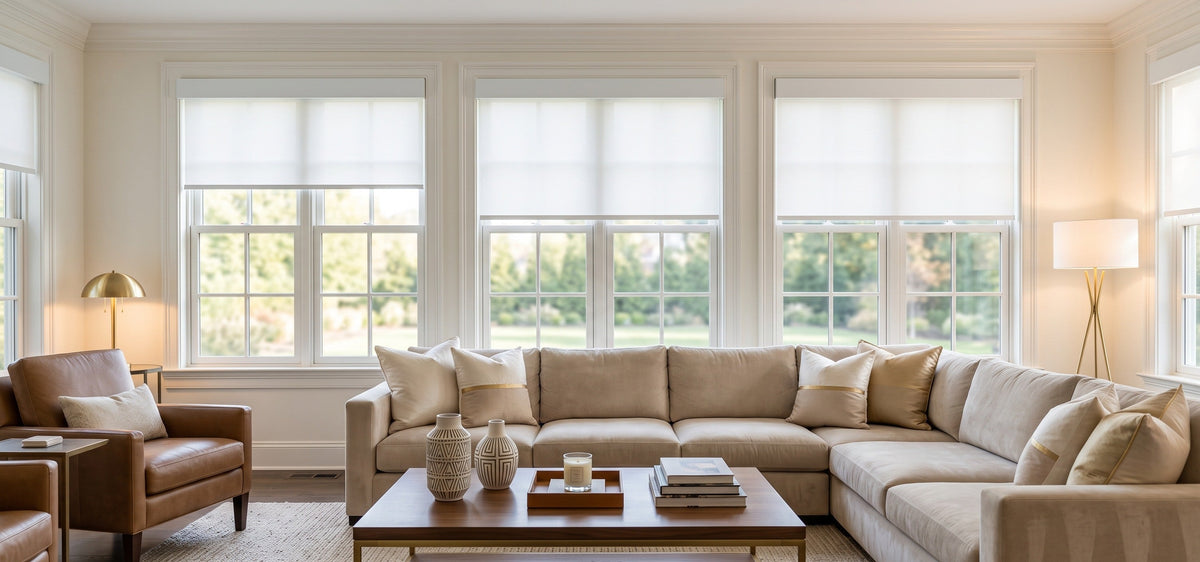

Once a floor has gone two shades lighter under the window, or a sofa arm no longer matches the cushion beside it, the question stops being whether sunlight is a problem. It is what goes on the window.
A window shade is the most direct answer available, because it stops the light before it enters the room rather than dealing with it afterwards. This guide covers how each type blocks the sun, and how to pick between them.

What a Window Shade Actually Blocks
Fading is not caused by ultraviolet alone. Three things act on a dye at the same time:
Ultraviolet — the largest single contributor, and the only one most window treatments are marketed against
Visible light — breaks down dyes independently of UV, which is why a UV-only fix leaves damage running
Heat — accelerates the breakdown already underway, and dries leather and wood alongside it
A shade intercepts all three at the glass, and, depending on the fabric, a share of the heat with them.
The second advantage is the one fixed treatments cannot match: a shade moves. A coating on the glass is still there in December when the room needs every hour of daylight. A motorized shade covers the window for the few hours that cause the damage and leaves it open the rest of the day.

Solar Shades: Blocking the Sun While Keeping the View
This is the default for a living room, a study, or anywhere the window is worth looking through.
Solar fabric is an open mesh that blocks a large share of the incoming light and UV rays while staying see-through.
SmartWings offers the Aventus solar fabric in three openness levels:
1% openness — blocks the most light and shows the least through it; the pick where fading is the complaint
3% openness — the usual middle ground for a room with both a desk and a view
5% openness — keeps the most view, better suited to glare than to damage
Two practical notes:
Solar shades start at $169.99 and are made to measure, so the panel covers the opening it was built for
Fabric samples are $3.50, and a mesh reads very differently against real backlight than on a screen
The full openness comparison is in the solar shade buying guide.

Cellular Shades: Blocking Heat Along With the Light
Heat belongs in this decision because it speeds up fading, and because it dries leather and cracks wood while the colour is changing.
A cellular shade holds a layer of still air in its honeycomb cells against the glass, which slows the heat coming through. It is the specification for:
West-facing rooms, where low afternoon sun arrives with the heat behind it
Sunrooms and any room that becomes unusable in August
Windows with leather seating or solid wood furniture in front of them
SmartWings cellular shades start at $179 light filtering and $185 blackout. The light filtering fabric is the one to look at first, since it takes the intensity out of the light landing on the floor while keeping the room usable during the day.
Further reading: the west-facing rooms guide and the heat control guide.

Blackout Roller Shades: For What Can't Be Replaced
Some contents do not get a second chance. Watercolours, prints, photographs, and anything on paper shift permanently, and no refinishing step exists for them.
A blackout roller shade is what goes in front of those windows:
A collection wall, a piano, or a hung work on paper
A room used mainly in the evening, where daytime light buys nothing
Bedrooms, where the same fabric does a second job
It is not a whole-house answer. A blackout panel on a room used all day is a poor trade, and light filtering vs blackout sets out where the line falls.
SmartWings blackout roller shades start at $159.99. Like the rest of the range they are cordless, which matters in a room where a shade sits low and a child or a pet passes it every day.
Woven Wood Shades: Filtered Light With Texture
Where the shade has to read as part of the room rather than as equipment, a woven wood shade filters light through a natural weave instead of a flat panel.
The weave is open by nature, so on its own it softens light rather than stopping it. On a sun-exposed window, specify a liner behind it:
50% Blackout Cloth Liner — keeps most of the daylight; not enough on a fading window
70% Blackout Cloth Liner — the working choice for a sunny living room
100% Blackout Cloth Liner — for bedrooms and rooms holding works on paper
SmartWings woven wood shades start at $219.00, hand-woven from natural straw and bamboo, with ramie, kenaf, jute, and linen appearing across the four collections.

Fit: Where the Sun Gets Past the Shade
The right fabric on a poorly fitted shade still lays a moving band of light across the floor every afternoon.
Inside mount sits within the opening and looks neater, but leaves a narrow gap down each side. In a fading room that gap is not cosmetic — it is a strip of direct sun crossing whatever sits opposite the window.
Outside mount places the brackets on the wall or trim above the opening. The panel extends past the frame and covers more of it, which is usually the better call when light is the actual problem.
SmartWings shades are made to measure rather than cut down from stock sizes, so an outside-mount panel is built with the overlap it needs. Both options are compared in the inside vs outside mount guide.
Timing: A Shade Only Blocks Sun When It's Down
Every fabric choice above is worth nothing on a shade that stays open through the afternoon, and nobody remembers to close one at three on a Tuesday.
SmartWings shades run on fixed schedules and on sunrise and sunset triggers, set in whichever smart home platform the household already uses — Apple Home, Amazon Alexa, or Google Home.
Use sunset-based timing rather than a clock time. It tracks the season instead of drifting out of alignment every few weeks.
Put unused rooms on a schedule first. A formal dining room takes a full day of sun with nobody there to notice.
Set one scene for the whole house. A single command closes the shades in several rooms before a week away.
One ordering note: sun-exposed rooms often have tall or awkward windows, and the rechargeable motor runs about 4 to 6 months per charge over a Type-C cable. Where recharging would mean a ladder, specify hardwired or Power over Ethernet at the time of ordering. The power options guide covers the choice.
FAQ About Window Shades and Sun Damage
Q1: Which window shade blocks the most sun while keeping the view?
A solar shade. SmartWings offers the Aventus fabric in 1%, 3%, and 5% openness — the tighter the weave, the more light and UV rays it blocks while remaining see-through. Openness is explained in the solar shade buying guide.
Q2: Do I need blackout shades on every sunny window?
No, and it makes a daytime room unpleasant. Blackout belongs in front of irreplaceable contents, while SmartWings solar and cellular shades handle the rest. Where the line falls is covered in light filtering vs blackout.
Q3: Inside or outside mount for a window that's causing fading?
Outside mount, in most cases, since the panel extends past the opening and lets less light past the edges. SmartWings builds it to measure with that overlap included — see the inside vs outside mount guide.
Q4: Does a woven wood shade block enough sun on its own?
The weave alone filters light rather than blocking it. On a sun-exposed window, specify a SmartWings 70% or 100% Blackout Cloth Liner behind the weave, from the woven wood collection.
Q5: Does heat matter as much as UV for fading?
It contributes, and it also dries leather and wood. SmartWings cellular shades hold air against the glass to slow it, from $179 — the heat control guide goes further.
Q6: How do I make sure the shades are closed during the worst hours?
Put them on sunset-based timing. SmartWings roller shades close and reopen on schedule through Apple Home, Amazon Alexa, or Google Home, so it doesn't depend on anyone being home.


