
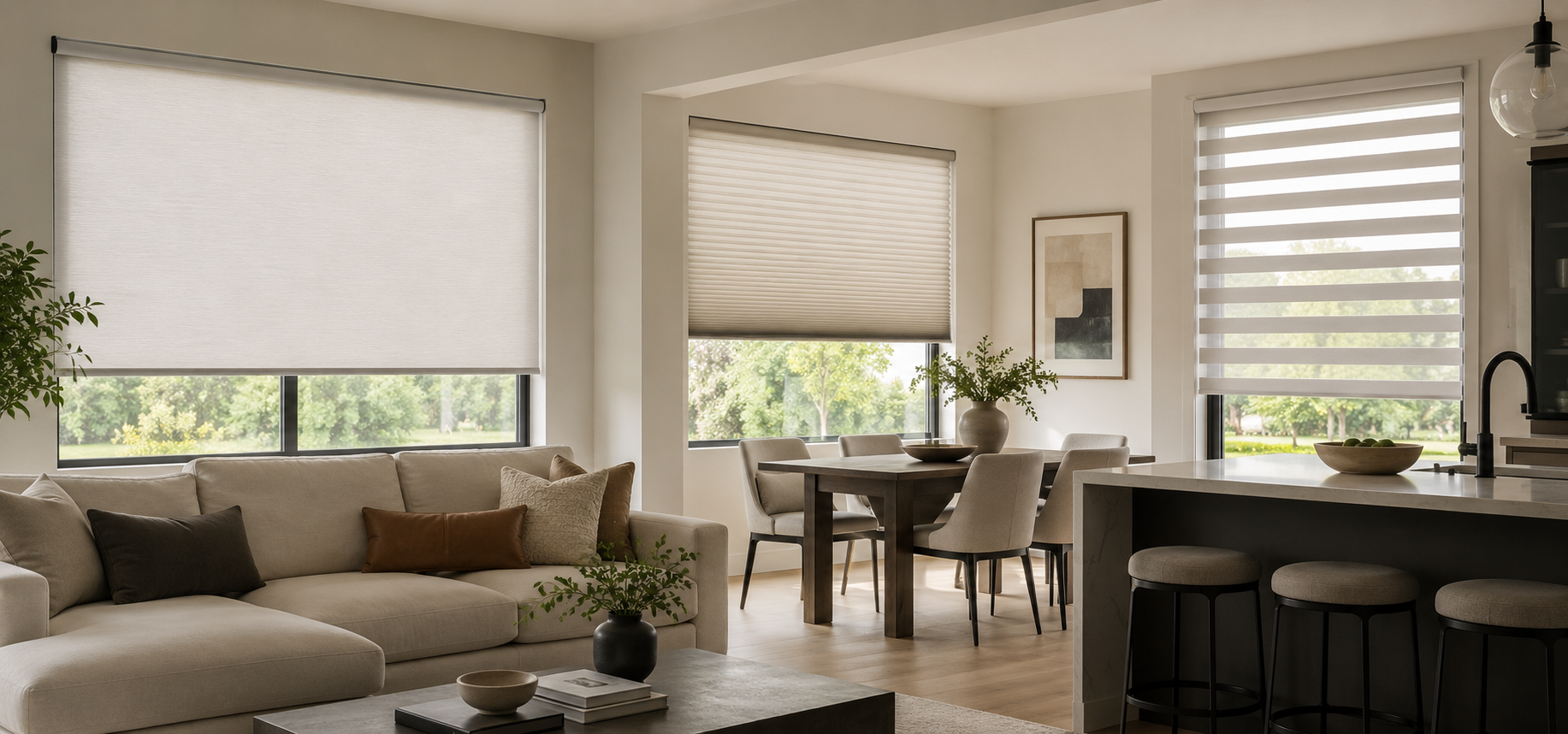

If you're shopping for window shades, you've probably noticed there are more than just one or two types to choose from. Roller, cellular, and zebra are three of the most common — each with different strengths and ideal use cases.
There isn't a single "best" option; the right pick depends on your needs and which structure matches your room best.
To make the decision easier, this guide breaks things down by two core dimensions — use scenarios and room-by-room recommendations — using SmartWings collections as concrete reference points.

Roller vs Cellular vs Zebra Shades: Quick Comparison
Before getting into specific scenarios, a quick overview of how the three types compare:
Factor |
Roller Shades |
Cellular Shades |
Zebra Shades |
Light control |
Full range from blackout to sheer |
Blackout and light filtering |
Flexible daytime light adjustment |
Privacy |
Good when fully closed |
Good |
Good when fully aligned |
Insulation |
Depends on fabric |
Structural insulation from honeycomb cells |
General |
Visual style |
Clean, minimal, easy to blend |
Soft, layered texture |
Modern horizontal stripes |
Best window types |
Small to mid windows, shallow frames, standard windows |
Large windows, sun-facing windows, insulation-focused rooms |
Living rooms, home offices, mid-sized windows |
Now let's go through each type individually, with the matching SmartWings collections.
Roller Shades: When They Fit & SmartWings Picks
Roller shades have the simplest structure of the three — a single fabric panel that rolls onto a top headrail. The operation is direct, maintenance is easy, and they adapt well to most standard windows.
When Roller Shades Work Best
Bedrooms, media rooms, home theaters. These rooms typically prioritize blackout performance. Blackout roller fabrics deliver consistently, and pairing them with an outside mount installation noticeably reduces the side light bleed that often shows up at the window edges.
Kitchens and bathrooms. The simple structure means fewer crevices to trap grime, and the fabric is generally easier to clean than other types — useful in spaces with grease, steam, or moisture.
Home offices and living rooms. When full blackout isn't needed, light filtering fabrics preserve natural light while softening glare — easier on both video calls and computer screens.
Shallow frames, narrow windows, sidelights. The roller headrail is compact enough to fit even narrow windows like sidelights, while cellular shades don't work as well in these spaces.
SmartWings Roller Shades Recommendations
Blackout Roller Shades — from $159.99 (Vinyl model), with 7 fabric options. This is SmartWings' broadest roller lineup. For a side-by-side fabric breakdown, see the 12 types of roller blinds guide.
Light Filtering Roller Shades — preserve natural light while softening glare, well-suited to rooms used mainly during the day. For cordless variants, see the cordless light filtering benefits guide.
For bedrooms with high blackout needs, see the maximum blackout roller guide and bedroom / living room / theater blackout selection.

Cellular Shades: When They Fit & SmartWings Picks
Cellular shades stand out structurally — the fabric folds into hexagonal honeycomb cells, and the trapped air inside acts as an insulation buffer. This is the main reason cellular shades tend to have stronger insulation performance among the three types.
When Cellular Shades Work Best
Sun-facing windows. Strong afternoon sun and the resulting heat transfer are common pain points for west- and east-facing windows. The honeycomb structure helps buffer that heat transfer, and pairing it with blackout fabric makes the effect more noticeable. For the energy logic, see the cellular blackout energy efficiency guide.
Rooms with high insulation needs. Older homes with hot summers and cold winters, or spaces close to large glass walls, benefit from the structural improvement cellular shades bring to the cold-bridge zone around the window frame.
Large windows and floor-to-ceiling glass. West- or south-facing large windows let in more heat and light overall, so the insulation advantage of cellular becomes more meaningful at scale — this is why it's often recommended for living room and dining room large windows.
Rooms needing flexible light layering. The Day & Night model uses two independent fabric layers that can be adjusted separately, giving you more nuanced control across different times of day than a single-layer shade.
SmartWings Cellular Shades Recommendations
Blackout Cellular Shades — from $179, with Single Cell and Double Cell options for different insulation needs. For full selection details, see the honeycomb blackout buying guide.
Worth noting: cellular shades aren't ideal for very narrow windows like sidelights — for those, roller is the better fit.

Zebra Shades: When They Fit & SmartWings Picks
Zebra shades use alternating sheer and solid stripes — when the two layers are offset, light comes through; when aligned, they block more light. The defining feature is flexible daytime light control, which is relatively unique among the three.
When Zebra Shades Work Best
Living rooms. When you want to keep the outdoor view during the day without dealing with glare, adjusting the stripe alignment on zebra shades handles both needs at once.
Home offices and studies. Video call backgrounds and screen glare are the two most common complaints in these rooms — zebra strikes a reasonable balance between preserving natural light and reducing screen reflection.
Apartments and condos with balcony rooms. The aesthetic leans modern, and the horizontal stripes lend a sense of visual extension that pairs well with minimalist or industrial décor.
Rooms needing flexible daytime light control. The stripes can be aligned for semi-transparent or near-transparent states during the day, then closed for more privacy or shading in the evening — giving more light layering than a roller's simple up-and-down operation.
SmartWings Zebra Shades Recommendations
Zebra Shades — SmartWings' main daytime light-control product, available in motorized versions with remote control or smart home integration.
Worth noting: zebra shades have transparent stripes by structure, so even when fully aligned there's still some light passing through.
They can't reach blackout-level darkness. If your bedroom or media room needs full blackout, choose Blackout Roller or Blackout Cellular instead.

How to Choose by Room: SmartWings Picks at a Glance
If you're still on the fence between roller, cellular, and zebra, working backward from the room often makes the decision easier — these are the most common real-life scenarios.
1. Bedroom
Morning sun hitting the bed and making it hard to sleep in, night-shift schedules needing daytime rest, nurseries requiring uninterrupted naps — these scenarios put a premium on blackout performance. Blackout Roller or Blackout Cellular are the priority picks here.
If the bedroom also faces west or sits next to a large glass wall, Cellular adds insulation benefits on top of blackout.
For straightforward setups with budget in mind, Blackout Roller is simpler. See the bedroom blackout selection guide for more.
2. Living Room
Living rooms typically juggle multiple uses — entertaining, watching TV, reading, enjoying the view — and light management needs to balance visibility and comfort. If you want to preserve the outdoor view during the day without glare, Zebra Shades fit well.
If you want full-range control with the ability to fully close down for movies at night, go with Light Filtering or Blackout Roller.
For large or floor-to-ceiling windows, see 7 large window treatment ideas.
3. Home Office / Study
Screen glare washing out the display, and harsh backlight on video calls — these are the two most common issues in this room. Zebra handles the balance between natural light and screen reflection reasonably well.
If you also need midday blackout or insulation, Light Filtering Cellular is worth considering.
4. Sun-Facing Windows & Large Windows
Floors near the window getting hot to the touch in mid-afternoon, sitting near the window feeling stuffy after a few minutes — these are typical west-facing scenarios. Cellular's honeycomb structure helps buffer heat transfer.
For exceptionally wide windows, a custom-sized roller solution can be a fit.
5. Kitchen & Bathroom
Kitchen grease and bathroom moisture make cleanability matter more than it seems. Roller's simple structure and easy-to-clean fabric make it the lower-maintenance choice for these spaces.
6. Sidelights, Door Windows, Narrow Windows
The slim glass panels next to an entry door, or narrow windows beside a sliding patio door — when the width is too small for cellular or zebra to fit properly, Roller is the practical choice.

3 Key Considerations Before Buying
Once you've narrowed down the type, three things are worth confirming before placing an order.
1. The Room's Core Priority
For blackout, go with blackout roller or blackout cellular. For insulation, prioritize cellular. For style and flexible daytime light, zebra is the pick. Locking this in upfront takes care of most of the decision.
2. Window Size and Shape
Most standard rectangular windows are covered by SmartWings' main collections. When window dimensions exceed the standard sizes listed online, you can contact customer service for custom sizing on main product lines.
Specialty windows — arched, trapezoidal, stairwell — are one of SmartWings' differentiators; reaching out for a tailored quote is the most efficient path.
3. Motorization and Smart Home Integration
If you already use a smart home ecosystem, the motorized version delivers more day-to-day value. SmartWings motorized shades are compatible with Apple Home, Google Home, Alexa, SmartThings, Home Assistant, Hubitat, and Homey — with Apple Home requiring a Thread Border Router such as HomePod mini or Apple TV 4K.
For full integration details, see the motorized window blinds smart home guide and the motorized window shade features guide.
FAQ About Roller, Cellular & Zebra Shades
Q1: Which type is best for a bedroom — roller, cellular, or zebra?
Bedrooms generally call for Blackout Roller or Blackout Cellular. Zebra can't reach blackout-level darkness due to its structure, so it's not the best fit for bedrooms or media rooms with full-blackout needs.
Q2: For west-facing windows, should I choose Cellular or Roller?
If heat transfer is the main issue from west sun, Cellular is the better pick — the honeycomb structure helps buffer heat. If blackout is the priority and insulation isn't a major concern, Blackout Roller also works.
Q3: Can Zebra Shades achieve blackout?
No. The structure of zebra shades includes transparent stripes, and even when both layers are fully aligned, some light still passes through. For full blackout, choose Blackout Roller or Blackout Cellular.
Q4: Do all three SmartWings types support motorization and smart home integration?
Yes. Roller, Cellular, and Zebra all have motorized versions compatible with major smart home platforms. Specific setup steps vary slightly by platform — see the dedicated guides for Apple Home, Google Home, and Alexa.
Q5: For large windows or floor-to-ceiling glass, which type is recommended?
For large windows, Cellular (insulation plus large-size friendliness) or Roller (simple structure, easy maintenance) are the priority choices. For exceptionally wide windows requiring custom sizing or multi-motor solutions, contact SmartWings customer service for tailored options.
Q6: What about specialty windows or non-standard sizes?
SmartWings' main product lines support custom sizing, and specialty windows — arched, trapezoidal, stairwell — are one of the brand's differentiators. When dimensions exceed the standard ranges listed online or the window shape is irregular, customer service can provide a custom quote.


