
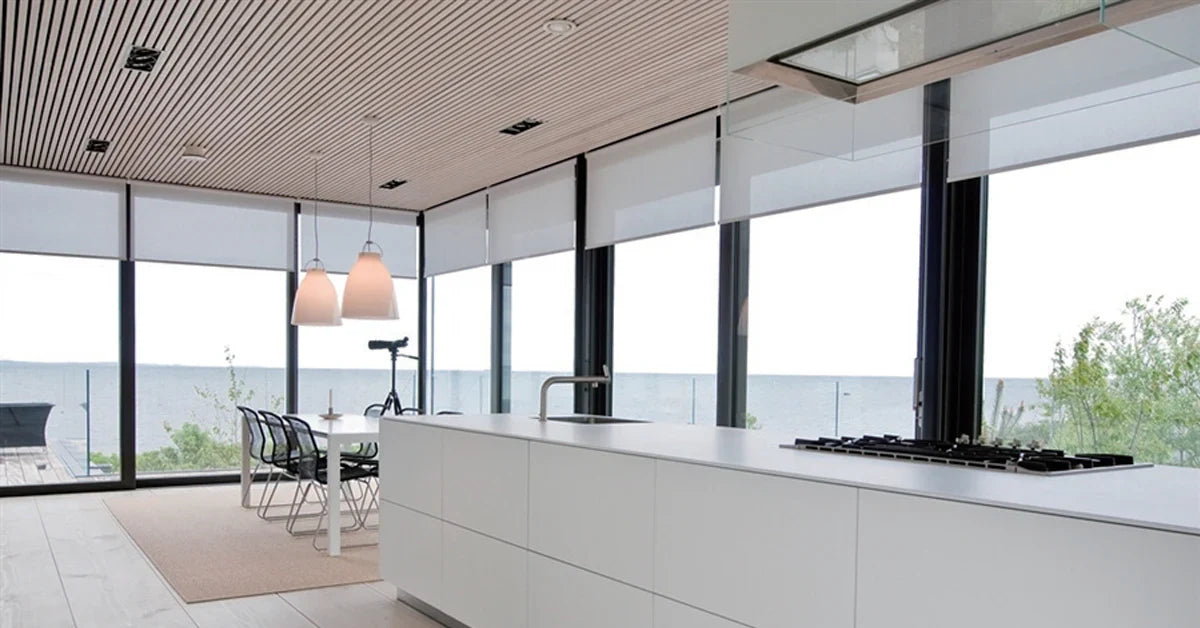

Within the Apple Home smart home ecosystem, smart shades are often one of the first devices homeowners choose to automate.
When integrated with lighting, climate control, and other systems, they help create a more seamless and comfortable living environment.
When selecting smart shades, the key is not just compatibility with Apple Home, but whether the solution truly fits your home’s setup and daily usage.
This guide breaks down the essential factors to help you make a clearer decision.

1. Can the Shades Connect Seamlessly to Apple Home?
To connect shades to Apple Home, it’s important to consider how the device communicates and which devices or hubs are required.
Some Matter shades integrate directly via Apple Home-compatible devices, such as HomePod mini or Apple TV 4K, while other shades, such as Zigbee or Z-Wave motors, require a compatible third-party smart home hub (for example, SmartThings or HomeKit-enabled Aqara Hub) to bridge them to Apple Home.
For most homes, a simpler connection path means easier setup and fewer long-term issues. If multiple hubs or systems are involved, both installation complexity and maintenance costs can increase.
With SmartWings motor options:
Matter motors → support Apple Home, Google Home, Alexa, and more, and can integrate with Apple Home through compatible Apple devices such as HomePod mini or Apple TV 4K
Zigbee / Z-Wave motors → usually require a compatible hub or dongle, depending on the system you use
If you prefer a more straightforward setup, Matter motor options are often easier to integrate into Apple Home—especially if you already use Apple devices like HomePod mini or Apple TV 4K.

SmartWings tip: Confirm the connection method before purchase to avoid adding unnecessary hubs or extra setup complexity later.
2. Does It Work with Your Existing Smart Home System?
The second key factor is your current smart home setup.
Typical scenarios include:
First-time smart home users
Homes already using SmartThings or Home Assistant
Users planning to run multiple platforms (Apple + Google + Alexa)
If you already have a system, compatibility becomes critical. Otherwise, each new device may require a new ecosystem.
SmartWings solutions:
Zigbee / Z-Wave motors → integrate with SmartThings & Home Assistant
Can be shared to Google Home or Alexa via SmartThings, making them a practical choice for homes already using a hub-based setup.
For a closer look at how this works, see more details on Z-Wave integration here.
Matter motors → enable cross-platform compatibility across Apple Home, Google Home, and Alexa, without requiring a dedicated SmartWings hub.
They still rely on compatible ecosystem devices for connection—for example, a HomePod mini or Apple TV 4K for Apple Home, as well as some Echo and Nest Hub devices that support Matter, making them a more flexible option if you plan to use multiple platforms.
If you’d like to see how this works in real use, you can learn more about Matter compatibility here.

SmartWings tip: Before choosing a motor type, confirm your smart home system (such as SmartThings or Apple Home) to avoid compatibility issues or the need for additional hubs later.
3. Is the System Stable for Daily Use?
Smart shades are used every day — not occasionally.They open in the morning, close at night, and often run on schedules or automation based on light and temperature.
Because of this, stability isn’t just a technical detail — it directly affects how reliable your daily routine feels.
In real use, issues like delayed response, failed automations, or status not syncing properly usually don’t come from the shades themselves, but from how the system is set up.
For example, when multiple platforms are involved or when the setup relies heavily on cloud connections, the system becomes more complex — and small issues are more likely to happen.
A more reliable approach is to keep the system as simple as possible:
Use fewer platforms instead of combining multiple systems
Reduce unnecessary layers between devices
Choose communication protocols that allow more direct control
This is why many homeowners prefer Matter-based solutions. With fewer dependencies on hubs and cloud services, the overall system tends to respond faster and behave more consistently in daily use.
If stability is your priority, Matter-based solutions are often more reliable, thanks to their more direct communication and reduced system complexity.

SmartWings tip:The fewer layers in your smart home setup, the more stable and predictable your experience will be.
4. Is the Power Option Suitable for Your Installation?
The power option you choose doesn’t just affect installation — it also impacts how convenient and reliable your shades will be over time.
In most cases, the right choice depends on whether your home is already built, under construction, or part of a larger smart system setup.
Battery-Powered
Battery-powered shades are the most flexible option, especially if you’re working with an existing space. They’re easy to install without wiring and are well-suited for DIY projects.
They typically need to be recharged every 4–6 months, and can also be paired with solar panels for more consistent charging.
Best for:
- Retrofit projects
- Apartments or rental homes
- Spaces without pre-installed wiring

Hardwired (AC/DC)
Hardwired shades provide a more permanent solution with a stable power supply, making them a better fit for long-term setups.
However, installation requires pre-wiring and must typically be handled by a licensed electrician, especially in new builds or high-end residential projects.
Best for:
- New construction
- Large or heavy shades
- Long-term, fixed installations

PoE (Power over Ethernet)
PoE is designed for more advanced smart home or commercial setups, where both power and data are delivered through a single Ethernet cable.
This reduces wiring complexity while enabling more centralized and stable control.
Unlike traditional solutions that separate power and communication, SmartWings introduces the world’s first PoE Matter over Ethernet motor, combining both power and data in a single Ethernet cable while enabling seamless integration across Apple Home, Google Home, and Alexa.
This approach simplifies system architecture and provides a more stable, scalable solution for whole-home or commercial smart shading projects.
Best for:
- Whole-home smart systems
- Large residential or commercial projects
- High-stability environments
View the complete PoE shade wiring guide for installation details.

SmartWings tip: Choose your power option based on your installation stage — not just convenience, but how the system will be used and maintained over time.
5. Does the Shade Type Fit Your Space?
While Apple Home controls how your shades operate, the shade type determines how they actually perform in your space — from light control to daily usability.
Different rooms naturally call for different solutions. Bedrooms usually require better blackout performance and automation scheduling, while living rooms need a balance between natural light and privacy.
For special window shapes or larger openings, factors like fit, coverage, and motor capacity become more important.
SmartWings offers a wide range of shade types, including roller shades, cellular shades, zebra shades, woven wood shades, dual shades, Roman shades, and curtains, making it easier to match both function and style in different spaces.
To better understand the available options, you can explore SmartWings shade collections here.

SmartWings tip: Choose the shade type first based on your space and usage, then match the motor and smart system accordingly.
6. What Should You Confirm Before Ordering?
Before placing an order, it helps to go through a few key details to avoid issues later on:
Whether a hub or Thread Border Router is required
If your selected shade type supports the motor you plan to use
Which power option fits your installation setup
Whether this is for a single room or a whole-home system
These factors are often overlooked at the beginning, but they can significantly affect installation, compatibility, and long-term performance.
SmartWings tip: Confirming these details upfront helps you avoid rework, additional costs, and potential system conflicts later.
Make the Right Choice for Your Smart Home Setup
Choosing smart shades for Apple Home is not just about compatibility — it’s about finding the right balance between system simplicity, stability, and everyday usability.
If you’re still comparing options, it’s worth taking a step back and reviewing your overall setup first. In many cases, starting from your home environment — rather than the product itself — makes the decision much clearer.
If needed, SmartWings can help you choose a setup that fits your space.


