
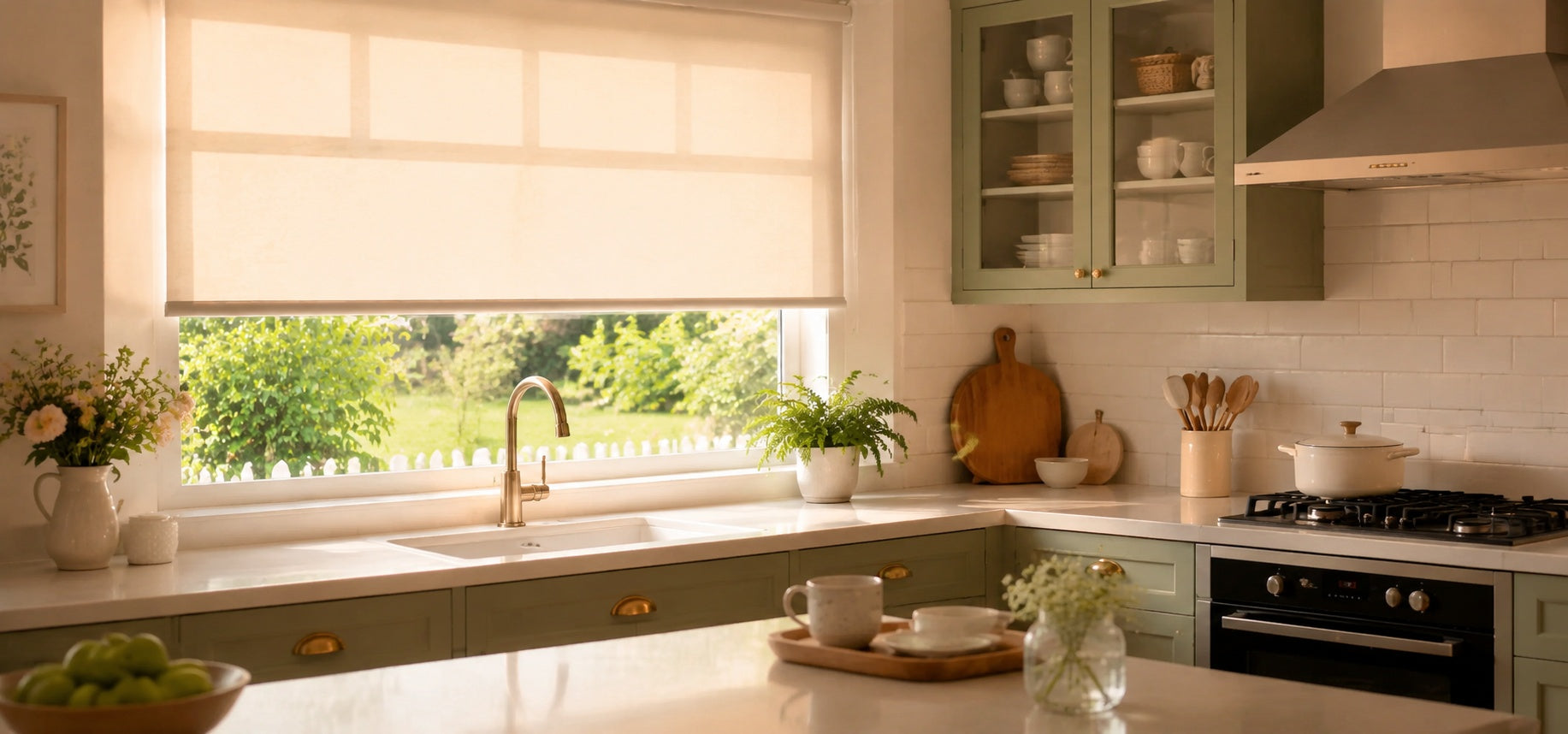

The easiest mistake when choosing kitchen blinds is putting the same shade on every window.
A kitchen is really a set of zones. The sink and stove deal with water and grease all day, the dining area wants comfortable light, sun-facing windows throw glare in the afternoon, and the windows far from water can take almost anything. Each zone has a different challenge, so the right shade type and features change with it.
Splitting the kitchen's windows into four zones makes the choice clear. The table below gives you the overview, and the sections after it walk through each zone. For windows beyond the kitchen, SmartWings covers most types across its smart shade range.

| Zone | Main challenge |
Recommended shade |
Key features |
Sink / stove window |
Moisture, grease, out of reach |
Vinyl roller shade |
Wipeable fabric, motorized, cordless |
Dining nook / breakfast area |
Balancing light and privacy |
Zebra shade |
Adjustable sheer bands |
Sun-facing window |
Glare, afternoon heat |
Light-filtering roller / cellular |
Glare control, insulation, scheduling |
Regular window away from water |
Few restrictions |
Roller / cellular / zebra |
Free choice by light and style |
Zone 1: Sink and Stove Windows
This is the most demanding window in the kitchen, and the one to plan first.
It sits right over the sink or stove, meets water and grease all day, so the surface has to wipe clean. It's also above the counter, out of easy reach, and a corded style can dangle into water. So this zone comes down to three things: a wipeable surface, controls you can reach, and no cord hanging into the splash zone.
For fabric, go with a wipeable, hard-surface material. The SmartWings vinyl roller shade has a smooth, non-absorbent surface, so a splash or grease spot wipes off with a damp cloth — a better fit here than fabric shades or styles with lots of crevices.
Fabric shades and cellular shades, which need more careful cleaning, aren't recommended in a spot this damp and close to grease.
The reach problem goes to motorization. A motorized sink-window shade raises and lowers by voice or schedule, so you don't lean over the sink to reach it, and the cordless design removes a cord that would otherwise hang into the water — also safer in kitchens with children.
For setup, see the motorized window shades buyer's guide.

Zone 2: Dining Nooks and Breakfast Areas
Away from water, the restrictions ease, and the focus shifts from durability to light and atmosphere.
Family breakfasts, kids doing homework, afternoon tea — this zone wants comfortable light without being exposed to the outside. Zebra shades suit it well: align or offset the sheer bands to soften daylight through, then shift toward privacy when you want it, moving between the two naturally.
If the dining area gets plenty of light and leans modern, roller shades work too — clean lines and a tidy stack. For how the types compare, see roller vs cellular vs zebra shades.

Zone 3: Sun-Facing Kitchen Windows
An east- or west-facing kitchen gets a stretch of low, angled sun — glare on the counter, a screen you can't read, and afternoon heat. This zone is about controlling glare and temperature.
A light-filtering roller shade cuts glare and blocks more UV while keeping some view out, so you can still see the yard while doing dishes. For a window you'd rather not be seen through, a blackout roller shade blocks light and sightlines more fully.
If that window is well away from water and takes the afternoon west sun, cellular shades are worth a look — the honeycomb structure helps insulate, so you're not baking by the window.
This zone also pairs well with scheduling: have the shade lower during the hottest stretch and rise once the sun moves on, with nothing to remember.

Zone 4: Regular Windows Away from Water
Some kitchen windows sit far from the sink and stove — a pantry corner, a window over a sideboard, a window by the back door. These have almost no special constraints, so you have the most freedom.
Go roller for good light and a modern feel, cellular for temperature control and quiet, or zebra for adjustable daytime light with privacy. SmartWings makes all three to measure, so choose by the window's light and your style.
Inside Mount or Outside Mount
With shade types chosen for each zone, you still set inside or outside mount per window, based on what's around the frame.
An inside mount sits within the frame, fits cleanly, and doesn't take up counter or cabinet space — good for tight spots like above the sink or behind the counter. An outside mount sits over the opening and covers edge gaps better, but you'll want to clear nearby cabinet doors and handles.
Most kitchen windows are tidier with an inside mount; for the trade-off, see inside vs outside mount.

4 Ways to Match Shades to a Kitchen
Bringing the four zones down to specific windows, these combinations are easy to follow:
Window above the sink: Vinyl roller shade, inside mount, motorized. Wipeable and moisture-friendly, raises by voice when out of reach, no cord in the splash zone.
Breakfast nook / dining area: Zebra shade, inside mount. Soft daytime light with privacy and view switched at will, comfortable for meals.
West-facing kitchen window: Light-filtering or blackout roller shade, scheduling. Cuts afternoon glare, lowering on its own during peak sun.
Sunny large window away from water: Cellular shade, motorized. The honeycomb helps insulate, with scheduling to manage light through the day.
A Note on Cleaning Kitchen Shades
Kitchens see more grease than other rooms, so shades here need cleaning a little more often.
Day to day, wipe the surface with a damp or soft cloth. A vinyl roller shade is a smooth, hard surface, so splashes and grease come off easily, which suits frequent cleaning; fabric styles and crevice-heavy designs don't belong close to grease. Whatever the shade, never soak it fully in water, which can damage the fabric or structure.
FAQ About SmartWings Kitchen Window Blinds
Q1: What shade works best over a kitchen sink?
Go with a wipeable, moisture-resistant hard surface. The SmartWings vinyl roller shade wipes clean with a damp cloth and suits the sink and stove better than fabric. Make it motorized so you can raise it by voice when it's out of reach.
Q2: Can cellular shades be used in a kitchen?
It depends on the spot. They're not recommended over the sink or stove, where the honeycomb structure and fabric are hard to keep clean in damp, greasy air. For a window well away from water, or a sun-facing one, SmartWings cellular shades work, and the honeycomb helps insulate.
Q3: How do I clean kitchen window shades?
Wipe the surface with a damp or soft cloth as part of routine cleaning. The SmartWings vinyl roller shade is a smooth hard surface that wipes clean of splashes and grease, which suits frequent kitchen cleaning; fabric and crevice-heavy styles don't belong near grease. Never soak any shade fully in water.
Q4: The window above my sink is hard to reach — what helps?
Motorization is the simplest fix. SmartWings motorized shades run by voice and schedule, so you don't lean over the sink, and there's no cord dangling into water — safer in kitchens with children.
Q5: How do I cut glare on a sunny kitchen window without losing the view?
Choose a light-filtering roller shade. The SmartWings roller shade cuts glare and blocks more UV while keeping some view out; for a window that needs full light and privacy control, switch to a blackout roller shade.
Q6: Are zebra shades good for a kitchen dining area?
Yes, as long as they're away from the sink and stove. SmartWings zebra shades align or offset their sheer bands, so a breakfast nook gets soft daytime light with privacy, switched at will.
Q7: Inside or outside mount for kitchen windows?
It depends on what's around the frame. Inside mount fits cleanly and saves counter and cabinet space, good for tight spots like above the sink; outside mount covers gaps better but needs clearance from cabinet doors and handles. Most kitchen windows are tidier with an inside mount.


