
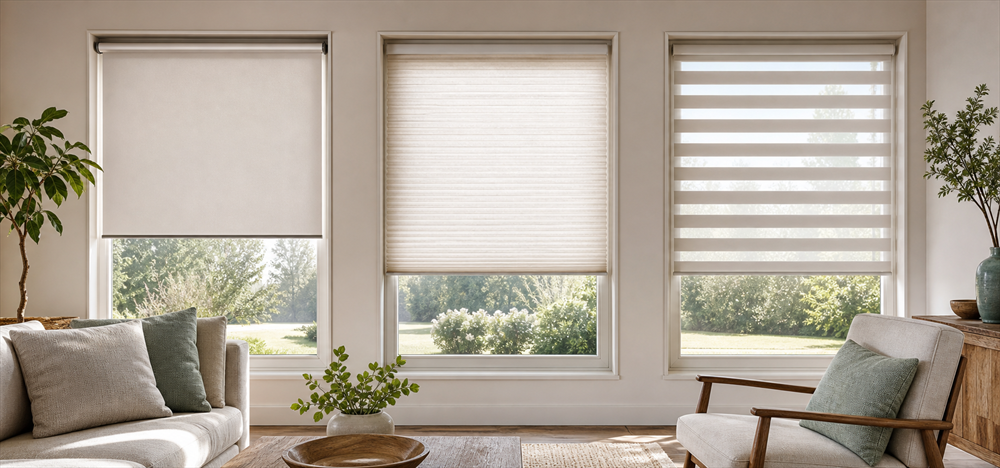

If you're picking motorized shades for your home, which type should you go with?
These three product lines are the ones you'll see most often:
Roller Shades — clean and minimalist, great for spaces that value a tidy look
Cellular Shades — honeycomb structure that delivers excellent insulation
Zebra Shades — dual-layer banded design that switches between light and privacy with ease
Every room has its own feel, and the shade that fits best will vary from one space to another.
This guide is here to help you find the right one based on what your home actually needs.

How Roller, Cellular, and Zebra Shades Work
Before choosing, it helps to understand how each one works.
Roller Shades
SmartWings roller shades use a single-layer fabric design, with a roller tube at the top that controls the movement. At the core is a motor that handles raising and lowering with a smooth, effortless touch.
When in use, the fabric extends down to cover the window; when not, it rolls back up and stays nearly out of sight.
Thanks to this simple build, roller shades are easy to live with day to day. A quick wipe from top to bottom keeps them clean, the fabric resists wear over time, and storage is straightforward.
The overall look stays crisp and uncluttered. SmartWings motorized roller shades start at $159.99 and cover this kind of need.

Cellular Shades
Viewed from the side, cellular shades look like rows of small hexagons — that honeycomb shape is exactly where the name comes from. The hollow cells trap air inside, creating an insulating barrier between the window and the room.
That's why cellular shades stand out for insulation and energy savings. In winter, they help block cold air from seeping in through the window; in summer, they slow the heat buildup from direct sunlight, keeping spots near the window more comfortable.
SmartWings offers both single-cell and double-cell options, with double-cell providing stronger insulation.
See the cellular shades buying guide for more. SmartWings cellular shades start at $179.

Zebra Shades
What makes zebra shades stand out is the dual-layer fabric — each layer features alternating sheer and opaque horizontal bands.
With a small adjustment, the bands either overlap to let light through or shift to block it, all without raising or lowering the shade.
This means you can keep the natural light and outside view during the day, then switch to full privacy with a single touch when you need it.
Living rooms facing the street, dining rooms, and home offices — any space where daylight and privacy both matter — are exactly where zebra shades shine. SmartWings zebra shades start at $189.99.

Choosing by Light Control
Each shade type handles light differently. Once you know what they're suited for, the choice becomes much clearer.
When you want the room truly dark
Afternoon naps in a quiet, dim bedroom; young kids settling into sleep; a home theater that feels properly cinematic — these are all scenarios where strong light blocking matters. Blackout roller shades and blackout cellular shades both deliver excellent darkening.
Roller comes in at a friendlier price; cellular adds insulation on top of the light blocking. SmartWings has dedicated blackout collections under both categories.
When you want daylight and privacy at the same time
Sometimes you want to keep the natural light and the view outside, but you don't want neighbors or passersby seeing in. That "light yes, exposure no" balance is exactly what zebra shades are built for.
The dual-band design lets you shift between open and private with a small adjustment, which makes them a great match for street-facing living rooms, dining rooms, and home offices.
When you want soft, filtered light
Sunrooms, hallways, and living rooms with large windows are designed around natural light in the first place. These spaces usually aren't about blocking light — they're about softening it, so the sun comes through without the harsh glare or heat of a direct hit.
Light filtering roller shades and light filtering cellular shades both create that softer atmosphere. Roller has a lighter, more modern feel; cellular keeps the room temperature steady as a bonus.

Choosing by Insulation and Energy Efficiency
If the temperature in certain rooms has been bothering you, this section will be helpful.
How cellular shades perform on insulation
As mentioned earlier, the air trapped inside the honeycomb cells acts as an insulating barrier that slows the heat exchange between the window and the room.
In everyday terms, that means the sofa near the window no longer feels noticeably colder than the rest of the room, and west-facing bedrooms stay easier to manage on hot afternoons.
Cellular shades make the most difference in these situations:
Rooms with strong afternoon sun where the AC has to work overtime
Rooms that feel cold near the window in winter, especially with single-pane or older window frames
Households that want stable indoor temperatures year-round
SmartWings blackout cellular shades bring light blocking and insulation together, which is why they're a go-to choice for west-facing bedrooms and older-home upgrades. Double-cell takes the insulation a step further.

How roller and zebra shades perform on insulation
While insulation isn't their main strength, blackout roller shades use thicker fabric that still helps reduce heat loss, and the dual-layer build of zebra shades provides some basic insulation as well.
If insulation is just a secondary consideration, both can hold their own.
Choosing by Room
Putting it all into the context of specific rooms makes the choice more intuitive.
Bedrooms
If you'd like to sleep in undisturbed by morning light, or want your kids to get a full nap, blackout roller and blackout cellular both work well. Cellular has the edge if the bedroom also gets west sun or feels cold near the window in winter.
Living Rooms
If TV glare bothers you but you don't want to give up natural light during the day, zebra shades will feel like exactly what you've been looking for. If the living room faces west and gets warm in summer, cellular will help more with the temperature. And if your style leans minimalist, light filtering roller is a steady, timeless pick.
Home Theaters
For a screen experience that feels fully immersive, blackout roller shades are a common choice. Paired with side channel accessories, they reduce light leakage even further.
Dining Rooms & Kitchens
Lunch with family during the day, with sunlight streaming in and a clear view outside; dinner gatherings in the evening or late-night cooking when you'd rather not have eyes from outside on you. Zebra shades adapt well to that day-to-night rhythm.
Home Offices
If your screen catches glare, zebra shades let you dial in just the right brightness — not too bright, not too dim. If you'd rather have soft, consistent light all day long, light filtering cellular keeps the workspace feeling calm.
Sunrooms & Large Windows
A sunroom exists for the light in the first place, and light filtering roller or zebra preserves that feel. SmartWings offers a range of sizes and custom options for large window setups.
Older Homes
If your home has single-pane glass or older window frames, cellular shades can noticeably improve year-round comfort.
A Quick Decision Shortcut
A quick match by what matters most to you:
For darkness, privacy, and friendly pricing → Blackout roller shades
For insulation, energy savings, and stable indoor temperature → Cellular shades
For style, flexible light control, and daylight-with-privacy → Zebra shades
SmartWings motorized window shades are compatible with Apple Home, Google Home, Alexa, and other major smart home platforms. Matter and Thread setups require a Thread Border Router such as a HomePod mini or Apple TV 4K.
FAQ About Roller, Cellular, and Zebra Shades
Q1: Which is the most energy-efficient — roller, cellular, or zebra shades?
Cellular shades, thanks to the honeycomb structure that traps air and slows heat transfer. SmartWings offers single-cell and double-cell options, with double-cell providing stronger thermal performance.
Q2: Which shade type is best for bedrooms?
Both blackout roller and blackout cellular shades work well. Choose cellular if the bedroom also needs temperature control; choose roller if budget is the priority.
Q3: Which shade type works best in living rooms?
It depends on what matters most. Zebra shades for flexible daylight and a modern look; cellular for west-facing rooms; roller for minimalist style.
Q4: Are SmartWings motorized shades compatible with smart home platforms?
Yes. They're compatible with Apple Home, Google Home, Alexa, SmartThings, and other major platforms. Matter and Thread setups require a Thread Border Router such as a HomePod mini or Apple TV 4K.
Q5: Can I mix different shade types in the same home?
Yes, and many homeowners do. SmartWings keeps all three categories under the same motorized control system for a consistent smart home experience.
Q6: What's the starting price for each?
Roller shades from $159.99 (Vinyl Blackout), cellular shades from $179, zebra shades from $189.99.


