
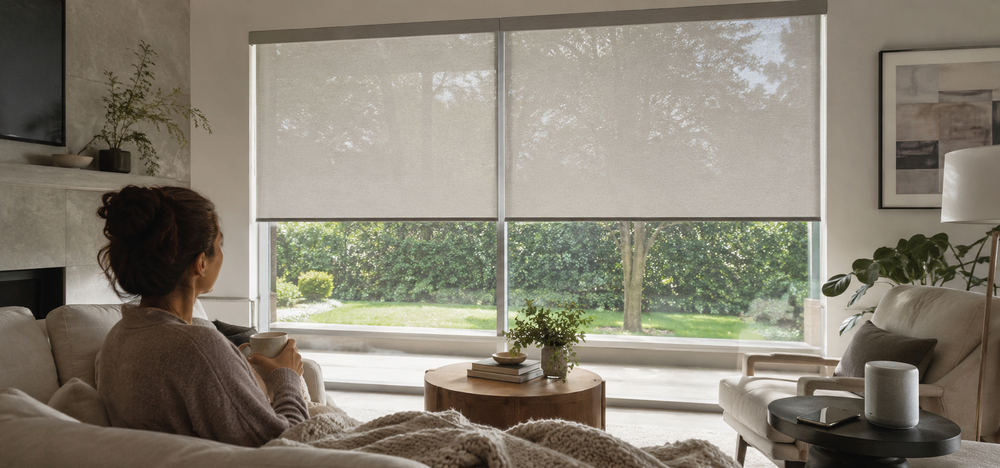

Motorized shades come in more styles, brands, and control options than ever before. On the surface they may seem similar, but the day-to-day experience can vary quite a bit.
Before placing an order, it helps to think through a few key questions:
Power source — battery, solar, or hardwired?
Smart home compatibility — Apple Home, Google Home, Alexa, or a more advanced platform like Home Assistant?
Light control — full blackout across the house, or soft filtered light in some rooms?
Budget and warranty — entry price, long-term upkeep, and what the brand stands behind.
This guide walks through each of these points, so you have a clearer picture before making the call.

Power Source: Battery, Solar, or Hardwired?
The way a motorized shade is powered shapes both how it gets installed and how you live with it day to day. It's one of the easiest things to overlook at the start.
Battery-powered shades are the most popular choice today.
There's no wiring involved, installation is straightforward enough to handle yourself, and a single charge typically lasts several months to a year depending on use and shade size.
For homes with many windows where frequent recharging feels like a chore, solar-assisted charging is also an option.
Hardwired shades fit better for homes that decide on motorized treatments during construction or major renovation.
Once tied into the home's electrical system, they need almost no upkeep and run with very steady performance.
SmartWings offers both battery-powered and hardwired options, covering both new builds and retrofits.
Worth noting: SmartWings is the world's first brand to release PoE Matter (Power over Ethernet) motors, where a single network cable handles both power and data — a clean solution for households with structured cabling in mind.

Smart Home Compatibility: Pay Attention Beyond "Feature Lists"
Many people choose motorized shades for the smartphone and voice control, but compatibility is a bit more nuanced than it first appears.
The major platforms — Apple Home, Google Home, Amazon Alexa, Samsung SmartThings — each have their own protocols and device requirements.
If you're already deep in the Apple ecosystem, Apple Home or HomeKit compatibility takes priority. If your home has plenty of Alexa devices, direct Alexa integration feels more natural. For homeowners who want high customization and local control, Home Assistant and Hubitat are stronger fits.
SmartWings shades are fully compatible with all major smart home platforms, and the brand is among the first to release Z-Wave 800 LR shades — a clear advantage for multi-story homes or larger properties where wireless range matters.
Light Control: Be Clear About the Kind of Light You Want
It's easy to focus on "motorized" and overlook the shade itself — namely, how it actually handles light.
If a bedroom needs the calm and darkness of early morning, the blackout series gives the most direct result. If a living room wants daylight and a view but with privacy on demand, zebra shades with their dual-layer banded design work well.
If a sunroom or hallway benefits from sunlight that's been gently filtered, light filtering fabrics keep the room feeling warm without harsh glare.
For more on product selection, see our earlier guides on roller, cellular, and zebra shade comparison and the room-by-room recommendations. SmartWings offers motorized versions across every light control type, so you can mix and match by room.
Material and Specialty Windows
The fabric and category you choose affect both lifespan and appearance — an area that's often underestimated.
Roller shades use single-layer fabric that's durable and easy to wipe clean, making them the most accessible entry point.
Cellular shades stand out for insulation thanks to their honeycomb structure.
Woven wood shades bring a natural, warm character that suits more relaxed interiors. Outdoor shades are built for patios and balconies, with UV and water resistance built in.
If your home has irregularly shaped windows — arched, trapezoid, skylight, or narrow sidelights — standard motorized shades often don't fit.
SmartWings offers dedicated Skylight, Trapezoid, and Arched Cellular Shades for these specialty windows, which is a capability many other brands simply don't have.

Warranty and Long-Term Value
A motorized shade is a piece of home upgrade that lives with you for five to ten years or longer, so the warranty terms are worth reading carefully before ordering.
The main wear points are the motor and the control system. Most brands only warranty the fabric for one to two years, with even shorter terms on the motor itself.
SmartWings backs its motors and controls with a 3-year warranty, which sits noticeably above the industry norm.
Another point worth weighing is responsiveness after the sale — especially if you're buying shades for multiple rooms.
Staying with a single brand and a single support channel makes long-term ownership noticeably easier.
Budget: Entry Pricing and Sensible Planning
Motorized shade pricing varies widely — entry-level to high-end custom can differ by 5–10 times.
Within the SmartWings line, Roller Shades start at $159.99, Cellular Shades at $179, Zebra Shades at $189.99, and Outdoor Shades at $199, putting the brand in the friendlier end of the mid-range market.
If this is your first experience with motorized shades, starting in one or two rooms you care about most — typically the bedroom or living room — is a reasonable approach.
After living with them for a while, expanding to the rest of the home becomes a more confident decision.
SmartWings shades are fully compatible with Apple Home, Google Home, Alexa, and other major smart home platforms.
FAQ About Choosing Motorized Window Shades
Q1: Are motorized window shades worth it?
For most homeowners, yes — especially for hard-to-reach windows, child safety, and homes with strong daily light changes. SmartWings motorized roller shades start at $159.99, making the entry point accessible for first-time buyers.
Q2: Battery-powered or hardwired — which one should I choose?
Battery-powered is easier for retrofits since no wiring is needed; hardwired suits new builds or major renovations where you can plan ahead. SmartWings offers both, plus PoE Matter shades that combine power and data on a single Ethernet cable.
Q3: Do motorized shades work with my existing smart home system?
SmartWings shades are fully compatible with Apple Home, Google Home, Alexa, SmartThings, Home Assistant, Hubitat, and Homey.
Q4: How long does a motorized shade typically last?
A well-built motorized shade can serve a home for many years. SmartWings backs its motors and controls — across roller, cellular, zebra, and other categories — with a 3-year warranty, longer than the industry norm of 1–2 years.
Q5: What if I have unusual window shapes like skylights or arched windows?
SmartWings offers dedicated lines for specialty windows, including Skylight, Trapezoid, and Arched Cellular Shades, so unusual shapes aren't left out of the smart home setup.
Q6: Can I start with just one room and expand later?
Yes, and many homeowners do. Starting in the bedroom or living room is a common entry point, and since all SmartWings shades share the same control system, expansion later stays seamless.
Q7: What's the noise level of motorized shades?
Modern motors are designed to operate quietly, which is especially important for bedrooms and nurseries where noise sensitivity matters.


