
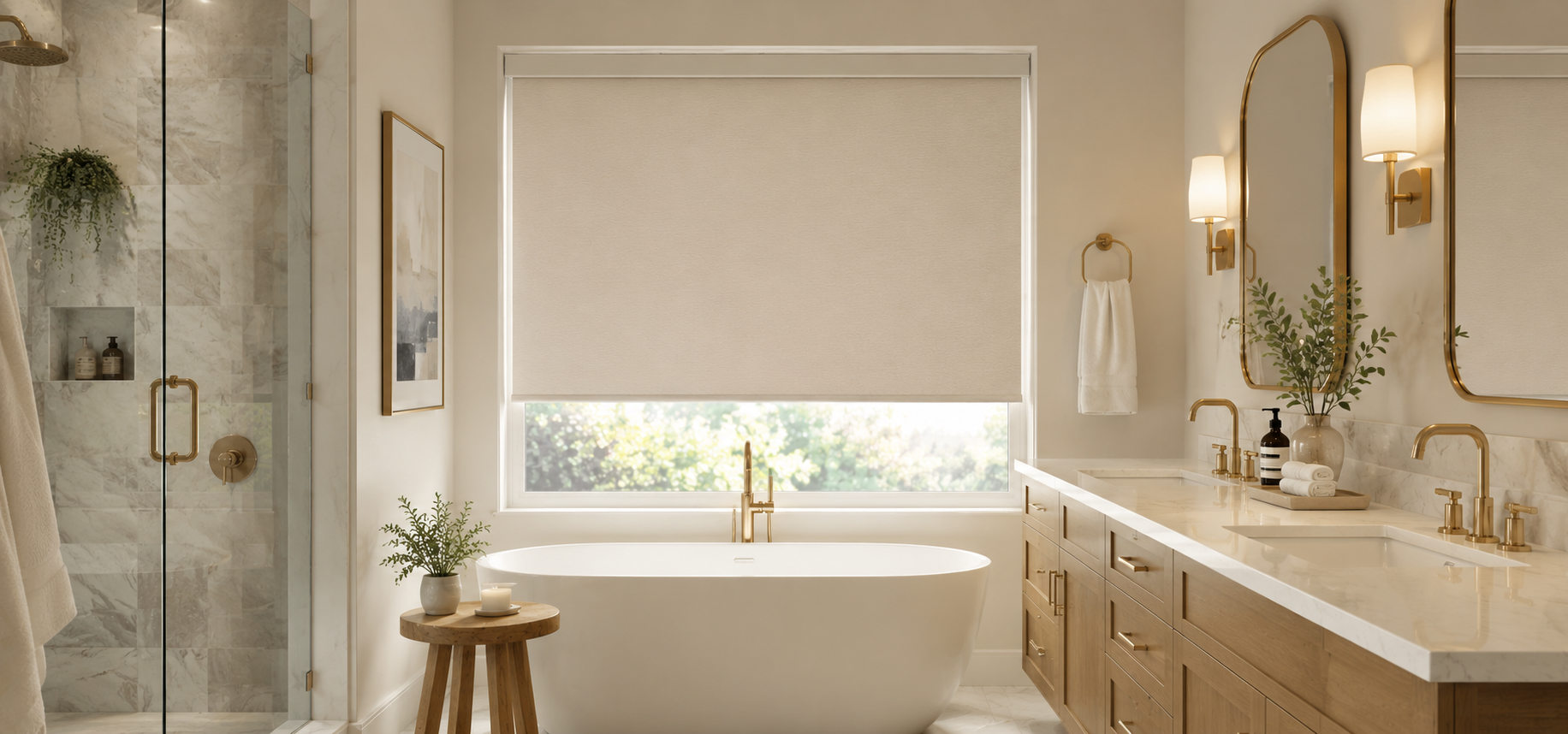

A bathroom is usually one of the more humid spaces in the home, and one where privacy matters most. That combination is why details like fabric and style carry real weight here. They shape whether a shade mildews or spots over time, and whether it keeps you covered after dark.
Choosing bathroom blinds works a little differently from choosing for a bedroom or living room. Know these seven things before you order, and you'll get it right the first time.

1. What Makes a Bathroom Different
Before you choose, get clear on the environment.
Steam and humidity from showers and baths linger, and they collect around the nearest window. Windows by the sink or shower get splashed directly. In those conditions, ordinary fabric shades, real wood, and natural weaves tend to absorb moisture, mildew, or warp.
So moisture resistance is usually the first thing to weigh in a bathroom. The good news is that the right product can cover several needs at once. A wipeable hard surface like a roller shade handles the damp, and with the right fabric it still looks good and keeps its privacy, so you aren't trading away style to stay dry.

2. Wet-Zone Windows: Moisture-Resistant Roller Shades
The window nearest the shower is the dampest spot in the room, so it's worth thinking through first.
Steam and splashes reach it often. If the material doesn't handle moisture, it can mildew or curl at the edges over time, and bathroom mildew is rarely easy to clean. This window suits a flat, wipeable surface that doesn't soak up water.
The SmartWings roller shade is an easy choice here. It has a simple build with few folds or crevices, and you can order it in a moisture-friendly fabric like vinyl that steam and splashes don't soak into. Soap and water wipe off with a damp cloth.
Roller shades handle the wet zone well, but a few other materials are better kept away from the shower:
Cellular shades: The honeycomb structure can trap moisture, so they're better away from direct steam.
Woven wood shades: Natural fibers hold damp, so they suit dry areas rather than a shower-facing window.

3. Privacy: Day and Night Coverage
Bathroom privacy is best thought of in two situations, day and night, and the second one is easy to overlook.
By day, a fabric that blocks the sightline is usually enough. At night, once the interior lights are on, an open fabric such as a high-openness solar shade or a thin sheer can show a silhouette from outside. That's why a style that turns see-through after dark doesn't suit a bathroom.
If the window faces a street, neighbors, or a shared walkway, a blackout roller shade or a thicker, more private fabric covers well around the clock. It's the same thinking as bedroom blackout; see how to choose blackout blinds for bedrooms.
For an upper-floor bathroom with good light and little exposure, a thicker light-filtering fabric strikes a middle ground.
For how the fabrics compare, see roller vs cellular vs zebra shades.

4. Dry-Zone Windows: Zebra Shades
Not every bathroom window sits over the shower. Windows by the sink, near the toilet, or away from the shower get less direct moisture, so you have more room to choose.
These suit zebra shades well. Offset the sheer bands for soft daylight, align them for more cover, and switch between light and privacy through the day. It's a nice fit for a bathroom with a view.
One thing to keep in mind: zebra shades aren't a blackout product, and privacy drops at night with the lights on. They suit dry-zone windows where nighttime privacy isn't critical. For the wet zone, a roller shade is the safer call.

5. Sill Water: Mounting Considerations
Here's a detail that's easy to miss. Bathroom sills often pool water.
If the bottom of the shade rests against a damp sill for long stretches, the edge takes on moisture more easily. Mounting outside the opening, with a little clearance at the bottom, keeps the shade off the wet sill and lowers the chance of damp and mildew. It's worth doing on wet-zone windows in particular.
6. Motorized and Cordless: Convenience and Safety
Two practical benefits in a bathroom come from motorization and the cordless design.
Before and after a shower, your hands are usually wet and soapy. Reaching for a shade then isn't hygienic, and it tends to dampen or dirty the fabric. A motorized shade runs by voice or schedule, so wet hands never touch it. The cordless design helps too: no cord to get wet or tangle, which is safer on slick floors and around children.
For more on that, see the benefits of cordless blinds in every room.
SmartWings motorized roller shades use a quiet motor, so they're unobtrusive early or late. They work with major platforms including Apple Home, Alexa, and Google Home (connecting through Matter over Thread requires a Thread Border Router, such as a HomePod mini or Apple TV 4K). You can open them by voice or set morning and night schedules.
For setup, see the motorized window blinds smart home guide.

7. Mildew and Cleaning: Care Tips
Once you've chosen the right material, a little upkeep keeps it performing for years.
For day-to-day cleaning, wipe the surface with a damp or soft cloth. A roller shade's hard surface clears splashes and soap easily.
The most useful habit is ventilation: run the exhaust fan or open a window after each shower to cut the moisture that would otherwise settle on the shade. And don't soak any shade fully in water, since that can damage the fabric or structure.
SmartWings Shades That Suit a Bathroom
Matching the points above to products, a bathroom comes together like this:
Roller shades are the versatile pick. Moisture-friendly fabrics like vinyl, flat and easy to wipe, with a blackout option for street-facing windows. They work in both wet and dry zones.
Blackout roller shades suit the higher-privacy windows, covering well day and night.
Zebra shades suit dry-zone windows away from the shower, adjusting light and privacy by day.
All three are made to your bathroom window's measurements, with a quiet motor and cordless design. To see every style, browse the full SmartWings range.
FAQ About SmartWings Bathroom Window Blinds
Q1: What material resists bathroom moisture best?
A wipeable hard surface is the safer choice. The SmartWings roller shade is flat, with moisture-friendly fabric options like vinyl that steam and splashes don't soak into, and it wipes clean with a damp cloth. That makes it a better fit for the wet zone than fabric shades.
Q2: Can cellular shades be used in a bathroom?
Not in the wet zone facing the shower. The honeycomb structure and fabric can trap moisture and are harder to keep clean in high humidity. A wipeable roller shade is the better pick there. In a dry, well-ventilated area away from the shower, cellular can be considered.
Q3: How do I get both daylight and privacy in a bathroom?
Choose a thicker fabric that filters light without showing a silhouette, and avoid thin fabrics that go see-through at night. For a street-facing window, a blackout roller shade covers well day and night.
Q4: Are zebra shades good for bathrooms?
They suit dry zones away from the shower more than the wet zone. SmartWings zebra shades switch between light and privacy by day, but they aren't a blackout product, and privacy drops at night with lights on, so use a roller shade in the wet zone.
Q5: Will a bathroom shade show a silhouette at night?
It depends on the fabric. A high-openness solar shade or a thin sheer can show a silhouette with interior lights on, so it's not ideal for a bathroom. A blackout or more private fabric protects nighttime privacy.
Q6: My bathroom sill pools water. How should the shade be mounted?
Keep the bottom of the shade clear of the sill. Mounting outside the opening with a little clearance reduces the edge resting against a damp sill, which lowers the chance of moisture and mildew.
Q7: What's the benefit of motorized shades in a bathroom?
Wet hands never touch the shade, since it opens by voice or schedule. The cordless design also means no cord to get wet or tangle, which is safer in a slick bathroom and around children. SmartWings motorized roller shades use a quiet motor as well.
Q8: How do I keep bathroom shades from mildewing?
Wipe them with a damp cloth as part of routine cleaning; a roller shade's hard surface is easy to keep clean. The key habit is ventilating after each shower to reduce moisture settling on the shade. And never soak any shade fully in water.


