
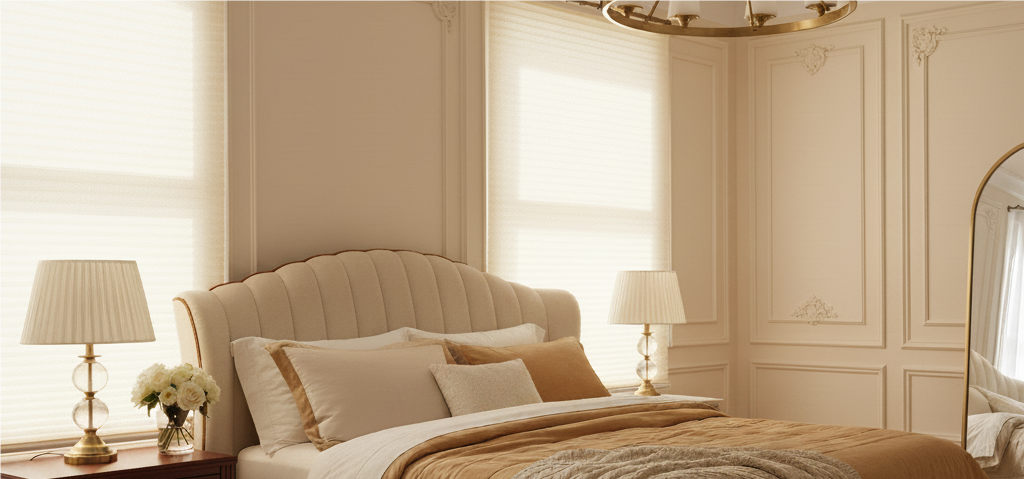

If you're comparing cellular shades vs roller shades, you're likely trying to solve a real problem:
How to lower energy bills and make your home more comfortable year-round?
Here’s the short answer:
Cellular shades are built for insulation and energy efficiency
Roller shades are built for light control and modern design
But here’s what most people don’t realize:
Not every window needs insulation, and not every shade will actually reduce your energy costs.
That’s where most buying decisions go wrong.
This guide breaks down the real differences, explains why these shades perform differently, and helps you choose what makes the most sense for your home, room by room.
1. What Are Cellular Shades
Definition
Cellular shades, also called honeycomb shades, are designed for energy efficiency.
How They Work
Built-in air pockets trap air, creating an insulating barrier between the window and your room.
Why It Matters
Windows are a major source of heat loss and heat gain. Cellular shades help slow that transfer.
What They Do
Reduce heat loss in winter
Block heat gain in summer
Stabilize indoor temperature
Lower HVAC usage over time
Key Takeaway
Cellular shades don’t just block light, they improve insulation and energy performance.
2. What Are Roller Shades
Definition
Roller shades use a single piece of fabric with no air pockets or insulation layer.
How They Work
The fabric rolls up into a tube, providing simple and functional window coverage.
What They Do Well
Control light and glare
Provide a clean, modern look
Offer flexible fabric options (sheer to blackout)
Stay budget-friendly
Limitations
They block sunlight, but do not significantly reduce heat transfer.
What This Means
Less brightness, but limited impact on temperature
Minimal effect on energy savings
Key Takeaway
Roller shades manage light, not insulation or energy efficiency.
3. Cellular vs Roller Shades: Quick Comparison
Here’s the real-world difference side by side:
Feature |
Cellular Shades |
Roller Shades |
Energy Efficiency |
High |
Low–Moderate |
Insulation |
Excellent |
Minimal |
Temperature Control |
Strong |
Limited |
Light Control |
Good |
Excellent |
Noise Reduction |
Yes |
No |
Design Style |
Soft, layered |
Clean, minimal |
Cost Value |
Long-term savings |
Lower upfront cost |
4. Cellular vs Roller Energy Breakdown
When comparing cellular shades vs roller shades for energy efficiency, the real difference comes down to one factor:
insulation
Windows are one of the main sources of heat loss and heat gain in a home. How a shade handles heat transfer determines its real energy performance.
Cellular Shades: Designed for Insulation
Cellular shades are built specifically to improve thermal performance.
They work by:
Trapping air inside honeycomb-shaped cells
Creating an insulating layer between the window and the room
Slowing down heat transfer in both directions
This means heat moves in and out of the room much more slowly.
Real impact:
In winter → more indoor heat is retained
In summer → less outdoor heat enters
Indoor temperature becomes more stable year-round
Roller Shades: Designed for Light Control, Not Insulation
Roller shades have a very different structure:
Single-layer flat fabric
No air pockets or insulation layer
No meaningful barrier against heat transfer
They mainly work by:
Blocking sunlight
Reducing glare and brightness
But they do not significantly change the temperature behavior of a window.
Why Roller Shades Fall Short in Energy Efficiency
Because roller shades lack insulation, they:
Cannot trap air
Cannot slow thermal transfer
Cannot prevent heat from passing through the glass
Real impact:
Summer heat still enters through windows
Winter heat still escapes
HVAC systems must work harder to maintain the temperature
Result: better visual comfort, but limited energy savings.
Where the Difference Matters Most
The performance gap becomes most noticeable in:
Large windows (higher heat transfer surface area)
West-facing rooms (strong afternoon sun exposure)
Extreme climates (hot summers or cold winters)
Key Takeaway
- Cellular shades improve how your home performs thermally
- Roller shades mainly improve how your home looks and feels
This is the fundamental reason why cellular shades are generally recommended for energy efficiency.

5. The Smart Way to Choose
Instead of choosing one shade for your entire home, the smarter approach is:
Match the shade to how each room is used
Here’s a simple comparison to help you decide:
Room Type |
Recommended Shade |
Why It Works |
Key Benefit |
Bedroom |
Cellular Shades |
Insulation + blackout improve sleep environment |
Better sleep & energy savings |
Living Room |
ExcellentCellular Shades
|
Large windows benefit from heat reduction |
Stable indoor temperature |
Home Office |
Roller Shades |
Reduces screen glare with clean aesthetics |
Better productivity & focus |
Kitchen |
Roller Shades |
Easy to clean and handles moisture well |
Low maintenance & durability |
West-Facing Rooms |
Cellular Shades |
Blocks strong afternoon heat |
Lower cooling costs |
Best Overall Strategy
Approach |
What It Means |
Why It Works |
Hybrid Solution (Recommended) |
Use cellular + roller shades together |
Balance energy efficiency, cost, and design
|
Use cellular shades where comfort matters most, and roller shades where function and style matter more.

6. Final Recommendation
If you’re still deciding, use this simple rule:
Choose Cellular Shades if your priority is:
Lower energy bills over time
Better insulation in hot or cold climates
A more stable, comfortable indoor environment
Best for bedrooms, living rooms, and large or sun-exposed windows
Choose Roller Shades if your priority is:
A clean, modern interior style
Strong light and glare control
Lower upfront cost and easy maintenance
Best for offices, kitchens, and design-focused spaces
What Most Homeowners End Up Doing
Instead of choosing just one type, many homeowners take a smarter approach:
Use cellular shades where comfort matters most, and roller shades where simplicity and design matter more.
This hybrid strategy helps you:
Maximize energy efficiency where it actually makes a difference
Avoid unnecessary upfront costs
Keep a consistent, modern look across your home
7. Common Questions Buyers Actually Ask
Q1: Are cellular shades really worth the higher cost?
A: Yes, if energy savings and comfort matter to you.
Compared to basic window coverings, cellular shades provide real insulation, which helps:
Reduce heat loss in winter
Block heat gain in summer
Lower long-term energy usage
In homes with large or sun-exposed windows, the energy savings can help justify the higher upfront cost over time.
Q2: Do roller shades help reduce heat at all?
A: Only slightly.
They mainly improve comfort by:
Blocking sunlight
Reducing glare and brightness
But they do not provide insulation, so they have a limited impact on indoor temperature or energy bills.
In short, roller shades control light, not heat.
Q3. Which should I choose for my home overall?
A: The simplest way to decide is this:
Choose cellular shades if you care more about comfort and energy savings
Best for bedrooms and living roomsChoose roller shades if you care more about design and simplicity
Best for kitchens and home offices
For most homes, a mix of both works best.


