
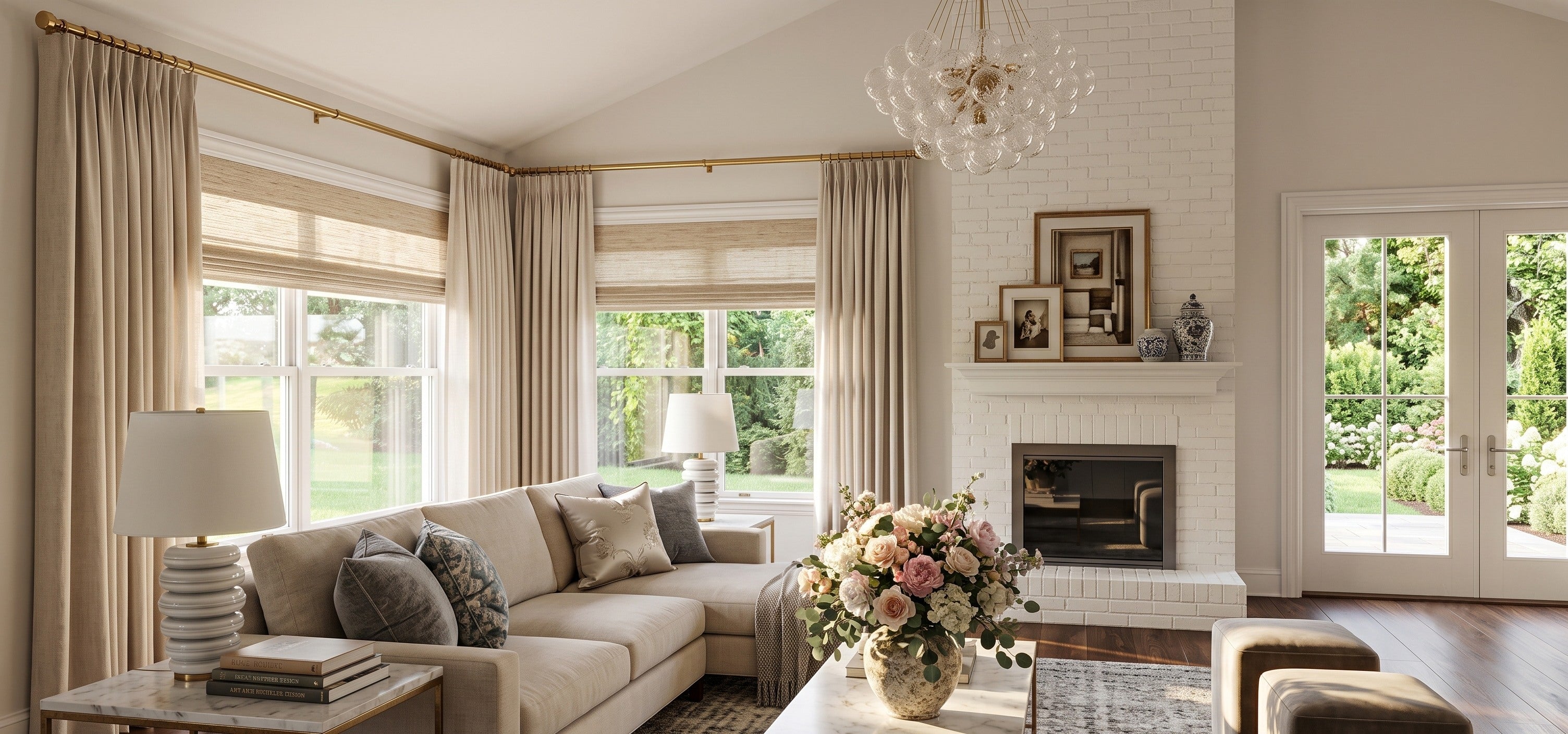

One of the clearest design directions in 2026 is layering: an inner shade that does the practical work of controlling light and privacy, paired with an outer drapery panel that adds softness, color, and depth. Instead of one covering trying to do everything, each layer plays to its strength.
The look has caught on because it solves a real tension in a window. A single shade can feel flat and purely functional, while drapery alone rarely gives you precise daytime light control. Put them together and you get both.
SmartWings makes this especially easy, since both the inner shade and the outer drapery can be motorized and controlled independently.

What Layering Actually Does for a Window
Layering isn't just about looks. Two layers earn their place because each one handles a different job.
Better light and privacy control: The inner shade manages daylight and sightlines through the day, while the outer drape adds a softer filter or fuller darkness when you want it. You get more positions between "open" and "shut" than either layer gives alone.
More visual depth: A single flat panel can look bare. A shade behind a drape adds dimension and a finished, considered look, turning the window into a focal point rather than an afterthought.
Flexibility as the day changes: Bright morning, harsh afternoon, private evening. Two layers let you move through all three without compromise.

How to Combine the Two Layers
A good layered setup pairs a hardworking inner shade with an outer drape that suits the room's style. Start with the inner layer, then choose the drape.
Inner layer, the shade that does the work:
Light-filtering roller shades: Soften daylight while keeping privacy, ideal under a decorative drape in living and dining rooms.
Cellular shades: Add insulation behind the drape, a good base layer in bedrooms and rooms that run hot or cold.
Zebra shades: Give adjustable light and privacy for spaces where the light changes often, like a study.
Outer layer, the drapery that adds style:
Sheer drapery: Adds an airy, diffused glow and a soft frame without cutting much light.
Blackout drapery: Brings stronger darkness and a heavier, more enveloping feel for bedrooms.
Linen drapery: Lends natural texture and warmth, in step with the move toward organic materials.

Why Motorizing Both Layers Changes Everything
Layering has one practical catch: two layers mean twice the reaching, tugging, and adjusting. Motorizing both is what makes a layered window genuinely easy to live with, and it's where SmartWings stands out.
Because both the inner shade and the outer drapery can be motorized, you can control each layer on its own. Draw back the sheer drape and lower the shade partway in the afternoon, or close the blackout drape over the shade at night, all without touching the fabric.
You can also set both layers to follow a schedule, so the window adjusts through the day on its own. The motorized drapery rod kit drives the outer layer, and both layers are compatible with Apple Home, Alexa, Google Home, and SmartThings. Connecting through Matter over Thread needs a Thread Border Router, such as a HomePod mini or Apple TV 4K.
If you'd rather keep it to a single system, the Dual Drapery builds the idea into one track, with a sheer layer and a blackout layer that move independently.

Layered Setups by Room
Different rooms call for different pairings. These combinations are easy to adapt.
Bedroom: A cellular or blackout roller shade inside, with a blackout drape over it, for darkness at night and insulation year-round.
Living room: A light-filtering roller shade with a sheer or linen drape, keeping the room bright and open while adding a designer layer.
Home office: A zebra shade inside for glare control, with a light drape that softens the look without darkening the room.
Large windows and sliding doors: A roller shade paired with full-height drapery reads as one cohesive, elevated treatment across a wide span.

Building Your Layered Look With SmartWings
A layered window comes down to two decisions: pick the inner shade for how you want to handle light, then choose the outer drape for the texture and mood you want in the room.
Keep the inner shade from the main lines, roller, cellular, or zebra, and choose the drapery in sheer, blackout, or linen to finish the look. Both layers are made to measure and can be motorized, so the whole window works on one routine.
If you're pulling together a modern, uncluttered space, our guide to roller shades for modern homes is a useful companion read. To confirm colors and textures before you commit, order fabric swatches and check them in your own light.
FAQ About Layered Window Treatments
Q1: What does layering window treatments mean?
It means using two coverings on one window: an inner shade for light and privacy, and an outer drapery panel for style and extra light control. Pairing a roller shade with a drape is a common example.
Q2: Is layering worth it, or is it just for looks?
It does both. The inner shade handles daylight and privacy while the outer drape adds depth and a finished look, and together they give you far more control over light through the day than a single covering.
Q3: Can both layers be motorized?
Yes. With SmartWings, both the inner shade and the outer drapery can be motorized and controlled independently, so you can adjust either layer by remote, voice, or schedule.
Q4: What's the easiest way to get a layered look in one system?
The Dual Drapery combines a sheer and a blackout layer on a single track, giving you daytime softness and nighttime darkness without installing two separate systems.
Q5: Which shade should I use as the inner layer?
Match it to the room: a cellular shade for insulation in bedrooms, a light-filtering roller for bright living areas, or a zebra shade where you adjust the light often.
Q6: Does layering work on large windows and sliding doors?
Yes. A roller shade paired with full-height drapery covers a wide span as one cohesive treatment, and motorizing both layers makes large or hard-to-reach windows easy to operate.


