
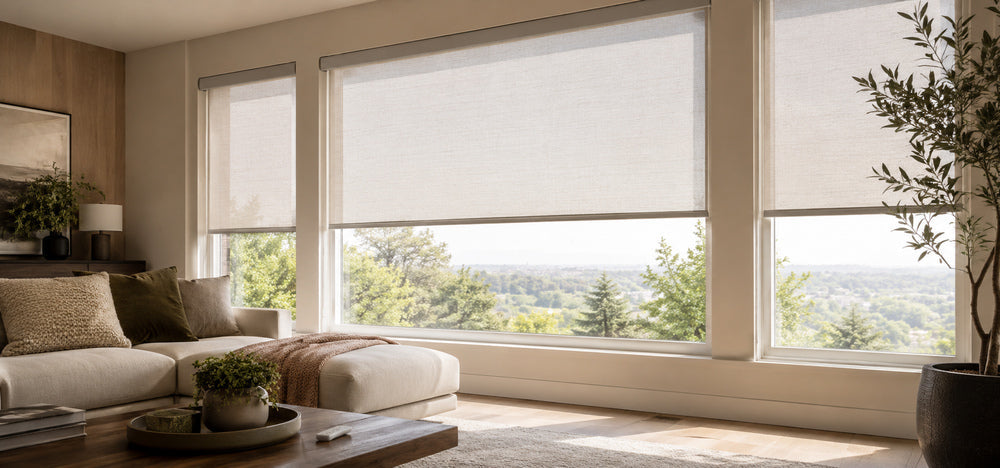

More and more homes are turning to cordless light filtering blinds when it's time for a window treatment upgrade. A few things tend to draw people in:
The fabric softens daylight, so rooms stay bright without the harsh glare, and the outdoor view comes through
No cords means a cleaner windowsill, and a friendlier setup for homes with kids or pets
Motorized control with voice, schedules, and smart home apps takes the daily routine off your hands
So how do you actually pick one? Below, we'll walk through where these blinds fit best and a few SmartWings options worth a closer look in the light filtering lineup.

What Cordless Light Filtering Blinds Really Are
"Cordless light filtering blinds" looks like a single product name, but it's really three ideas working together:
Cordless — no pull cords, no chains, just a clean windowsill
Light filtering — a semi-translucent fabric that softens daylight while keeping the outdoor view
Motorized — powered movement, controlled by remote, smart home apps, or scheduled scenes
A quick note: you might also see "manual cordless shades" out there — the kind you push or pull up by hand.
SmartWings takes a different path. Its cordless lineup pairs no cords with a motor, so you don't have to bend down to adjust each shade.
Voice, schedules, and apps handle the day-to-day, which makes the whole routine a lot easier.
For more on what that upgrade really feels like, take a look at the motorized vs traditional blinds guide.
Light filtering fabric has its own character: soft, not blocked. Unlike blackout fabrics that focus on deep darkening, light filtering fabrics let daylight come through in a soft, even way — easing direct glare while keeping the natural lit-up feel of the room.

5 Benefits of Cordless Light Filtering Blinds
When cordless, light filtering, and motorized come together, the day-to-day benefits show up in five main ways.
1. Softer daylight, more comfortable rooms
Light filtering fabric diffuses sunlight evenly, so rooms don't get hit with strong contrast between bright spots and shadowed corners.
Whether you're working at a screen, relaxing in the living room, or eating at the dining table, the light just feels more comfortable.
And because the view stays, you don't get that closed-in feeling during the day.
2. No cords — easier for families with kids or pets
With no pull cords or chains, the area around the window feels cleaner and more relaxed. The windowsill itself stays uncluttered, with no dangling lines to deal with.
3. Motorized control, less daily effort
Control options layer together: app control through Apple Home, Google Home, or Alexa; voice assistants; schedules and scenes; plus an optional multi-channel remote.
The feature most people end up relying on is scheduling — shades rise with the morning, close in the evening, and you barely need to touch them.
For more on smart control, see the motorized window blinds smart home guide.
4. Clean look, easy fit with modern interiors
No cords, flat fabric, and a hidden motor keep the window treatment itself quiet in the room — letting the space speak instead. Modern, transitional, refined-contemporary, and Scandinavian interiors all work naturally with this look.
5. Compatible with major smart home platforms
SmartWings cordless light filtering blinds are compatible with Apple Home, Google Home, Amazon Alexa, and Z-Wave smart home systems. If you're already using one of these platforms, picking the motor option that fits will make setup feel smoother.
Where They Work Best
The rooms that suit cordless light filtering blinds usually share one trait: you spend long stretches of daytime there, you want the light, and you'd like a bit of privacy too.
Living rooms
Daytime natural light and the outdoor view both stay, while direct sightlines from outside get softened. The fabric takes the edge off bright sunlight, making longer stretches indoors feel more pleasant.
Dining rooms
Softer light around the table sets a more natural mood — especially nice for breakfast and lunch.
Home offices and studies
Less screen glare, more even lighting — the kind of setup that's easier on the eyes over a long workday.
Kids' rooms
The cordless design is a more relaxed choice for homes with little ones, and the soft daylight keeps playtime well-lit.
Bedrooms (daytime)
If your bedroom doubles as a daytime space, light filtering on its own works well. If you also want deep darkening at night, dual shades are worth a look — two independent fabric layers in one mechanism, covering daylight and darkness from a single product.

SmartWings Cordless Light Filtering Options
A few SmartWings product lines can be built as cordless light filtering shades. Here are the ones worth considering — browse the full collection over on the SmartWings website.
Light Filtering Roller Shades
The most versatile starting point — simple structure, plenty of fabric choices. Options run from solid colors to subtle textures, fitting modern, Scandinavian, and transitional interiors.
For a deeper look at roller types, see the 12 types of roller blinds guide.
Light Filtering Cellular Shades
The honeycomb structure brings two things at once: softened light and added insulation. The trapped air layer slows heat coming in during summer and holds warmth in during winter.
For west-facing rooms or homes that care about energy use, the difference is felt pretty clearly. See the honeycomb shades buying guide for more.
Zebra Shades
Alternating sheer and opaque stripes that slide into or out of alignment as the shade moves, giving you flexible daytime light control.
The look leans modern, and the fit feels right in living rooms, offices, and dining rooms where you're around for most of the day.
Dual Shades
When a room needs both softness and deep darkness — bedrooms being the classic example — dual shades carry two independent fabric layers in one assembly. Pair light filtering with blackout, and a single product covers the full day.
How to Choose the Right One for Your Home
Before picking a model, three quick questions help narrow things down:
1.Which room is the main use case? Living rooms, dining rooms, studies → Light Filtering Roller or Zebra both work nicely; strong west-facing sun or insulation needs → Light Filtering Cellular; daytime softness plus nighttime darkening → Dual Shades.
2.Which interior style are you leaning into? Modern minimal → Zebra or solid-color Roller; transitional or refined-contemporary → textured Roller or Cellular; Scandinavian → lighter-tone Roller.
3.Which smart home platform do you want it to connect to? Apple Home or Google Home users will lean toward Matter over Thread; Z-Wave system users will pick the Z-Wave motor.
These styles all come with custom sizing and a range of fabric options at SmartWings, so they can be matched to your actual windows.
If you'd like to explore more styles and selection thinking, the best smart blinds 2026 buying guide is a good next read.
FAQ About Cordless Light Filtering Blinds
Q1: What are cordless light filtering blinds?
Cordless light filtering blinds combine three things: no cords, a soft-light fabric, and motorized control. The fabric softens daylight while keeping the outdoor view, and the cord-free build pairs with a motor for hands-off use. SmartWings takes the cordless + motorized approach, so there's no manual pulling involved.
Q2: Which rooms are they best suited to?
Living rooms, dining rooms, studies, kids' rooms, and home offices all work well. Any space where you spend a lot of daytime, want the natural light, and would like a touch of privacy is a strong fit for cordless light filtering blinds.
Q3: What light filtering options does SmartWings offer?
The main ones are Light Filtering Roller Shades, Light Filtering Cellular Shades, and Zebra Shades. If a room needs both soft daylight and deeper darkening, dual shades are also worth a look.
Q4: How long does the battery last?
SmartWings motorized shades with a built-in rechargeable lithium battery last 4–6 months per full charge, recharged with a standard USB-C cable.
Q5: Are they hard to install?
Not really. SmartWings ships every order with mounting brackets, screws, a user manual, and a charging cable. Standard windows take about 10–20 minutes for a DIY install, with both inside mount and outside mount supported.
Q6: How do I clean the fabric?
For everyday upkeep, a soft brush or a low-suction vacuum attachment does the job. Spot-clean stains with a damp cloth or mild detergent, and avoid hand-washing or machine-washing. For more detail, see the how to clean blinds & shades guide.


