
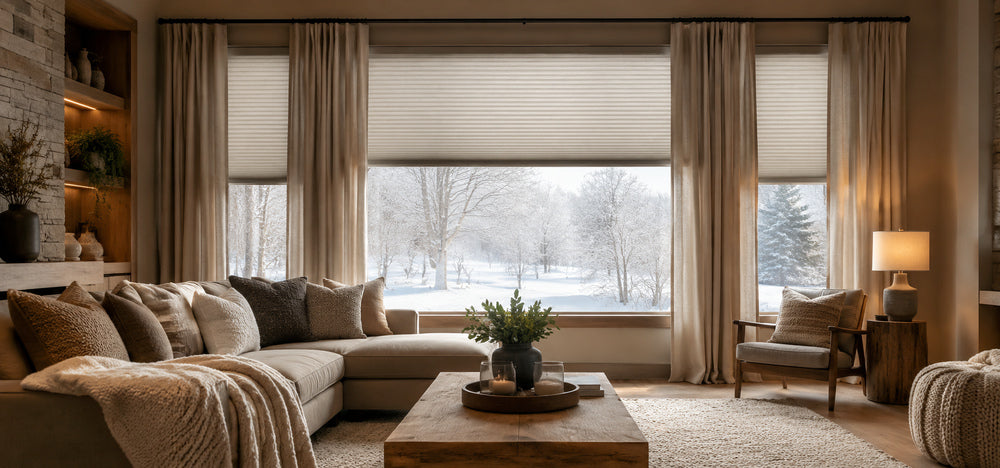

If you sit near a window in winter, you've probably felt those subtle drafts of cool air drifting in — even with the heat running, the spots near your windows tend to feel noticeably colder than the rest of the room.
That's because windows are one of the biggest places heat escapes from in a home — glass itself isn't a good insulator, and small gaps around the frame can let cold air seep in, quietly pulling down the indoor temperature.
The right window treatments can make a real difference. Below are a few directions worth considering for winter, along with the SmartWings options that fit each one.

Cellular Shades: The Workhorse of Winter Insulation
When it comes to winter, cellular shades are almost always the first pick. The insulation comes from the structure itself — the honeycomb cross-section traps a layer of air inside each cell, and air is a natural insulator.
That trapped air slows down heat loss through the glass and helps block cold air from drifting in.
Cellular shades come in two main configurations: Single Cell works well for milder climates, and Double Cell has more air pockets for stronger insulation — a better fit for cold regions or households that care about energy use.
For a closer look at the two, see the single vs double cell cellular shades guide.
SmartWings Cellular Shades start at $179 and come in custom sizes — bedrooms, living rooms, and home offices all work well.

Blackout Fabrics: Blocking Drafts and Holding Warmth
Blackout fabrics were designed for deep light blocking, but the heavier weave also helps reduce cold air seeping in through window edges.
North-facing windows, bedrooms, and home theaters tend to feel the biggest difference once a blackout roller or blackout cellular shade is in place.
Outside mount is worth considering for winter — the shade extends beyond the frame on both sides and the top, leaving less room for cold edges to leak through, which lifts the insulation effect another step.
For more on pairing blackout with rooms, see the bedroom blackout blinds guide.

Heavy Drapery: Visual and Physical Warmth
Heavy drapery does two things in winter. Physically, the thicker fabric adds another buffer against cold air.
Visually, it makes a room look warmer right away. Living room windows, sliding glass doors, and large dining room windows are where drapery shows up best.
SmartWings Motorized Drapery & Curtains supports single-open, dual-open, and pair configurations, with fabrics ranging from sheer panels to heavier room-darkening textiles.
For winter, the heavier weights are the better pick — for a broader comparison, see the best smart curtain brands guide.
Woven Wood: Warmth Through Natural Texture
If roller shades or cellular shades feel too industrial for your space, Woven Wood Shades are another direction worth considering for winter. Bamboo, grass, and jute weaves carry warmth in their texture, and the way they soften incoming light adds a layer of coziness to the room.
The style fits Boho, Coastal, Mid-century, and natural interiors especially well. On shorter winter days when natural light is scarce, the woven texture filters daylight gently and keeps the room from feeling stark.
For more on pairing natural materials with larger windows, see the 7 large window treatment ideas.

Layered Looks: Maximum Warmth, Maximum Cozy
For homes where winter warmth is a real priority, a single-layer window treatment may not be enough. Layered combinations are worth a look:
Cellular + Drapery — cellular handles insulation, drapery adds visual softness and another barrier
Roller + Curtain — roller covers the function, curtain adds decorative weight and an extra layer
Dual Shades — two independent fabric layers (light filtering + blackout) housed in one mechanism. SmartWings Dual Shades give you the layered look with simpler day-to-day operation than stacking two separate products.
The layered approach isn't just about warmth — it adds visual depth too, so the room feels richer rather than flat through the colder months.
Smart Control Makes Winter Easier
Smart control is where winter window treatments really start doing the work for you. The two scenarios most people end up using daily:
Scheduling — shades rise in the morning to let sunlight passively warm the room, and lower automatically at sunset to lock in the heat the room has gathered. Even a simple schedule like that can keep indoor temperatures more stable without pushing the heating system harder.
Remote control — close everything in one tap as you leave for the day; warm up the living room before you get home by opening the shades on your way back.
SmartWings motorized shades are compatible with Apple Home, Google Home, Amazon Alexa, and Z-Wave smart home systems.
For more on smart home setup, see the motorized window blinds smart home guide.

How to Choose the Right Winter Window Treatment for Your Home
A winter upgrade doesn't need to happen all at once — start with the spot that bothers you most:
Insulation-first, budget-conscious → Single Cell or Double Cell Cellular Shades
Bedroom darkening + warmth → Blackout Cellular or Blackout Roller with outside mount
Large living rooms or floor-to-ceiling windows → Motorized Drapery with heavier fabric
Natural, Boho, or Mid-century interiors → Woven Wood Shades
Maximum warmth → Layered look (Cellular + Drapery) or Dual Shades
You can find products across each of these directions on the SmartWings website, with custom sizing and a wide range of fabric options.
For a broader take, the best smart blinds 2026 buying guide is a useful next read.
FAQ About Winter Window Treatments
Q1: Which window treatments are best for winter insulation?
Cellular Shades are the leading choice — the honeycomb structure traps air and slows heat loss through the glass. SmartWings Cellular Shades start at $179, with Double Cell recommended for colder regions.
Q2: Do blackout window treatments actually help with warmth?
Yes. The heavier blackout fabric helps reduce cold air slipping in around the window edges, especially when paired with outside mount installation. SmartWings Blackout Cellular gives you both deep darkening and added insulation — a strong fit for bedrooms.
Q3: Won't layered window treatments feel too heavy in winter?
Not really. Layering is about adding function, not overcrowding the window. SmartWings Dual Shades combine light filtering and blackout fabrics in one mechanism — you get the layered look with cleaner everyday operation.
Q4: How does smart scheduling help save energy in winter?
Open the shades in the morning to let sunlight passively warm the room; close them at sunset to lock in heat as outdoor temperatures drop. SmartWings motorized shades support scheduling and scene control through Apple Home, Google Home, and Alexa.
Q5: I want to upgrade for winter but I'm on a budget — where do I start?
Start with the coldest room — usually a north-facing bedroom or a large living room. Upgrading just one or two of those windows to Cellular Shades or Blackout Roller Shades delivers the most noticeable comfort change, and you can expand to other rooms later.


