

As energy costs continue to rise, more homeowners are looking for practical ways to improve comfort while reducing unnecessary energy use. One area that is often overlooked is the window.
Windows play a major role in how heat moves through a home. During summer, sunlight and outdoor heat enter through the glass, causing indoor temperatures to rise quickly. In winter, warmth escapes through the same areas, forcing heating systems to work harder.
The right window treatment can help reduce this problem significantly. But not all options are designed with energy efficiency in mind.
If you’re shopping for energy-efficient window treatments, it’s important to understand which features actually make a difference—and which are mainly decorative.
Why Energy-Efficient Window Treatments Matter
Many homeowners think of window coverings as a way to control light or add privacy. While those benefits matter, energy efficiency has become just as important.
Poorly insulated windows can contribute to:
- Higher cooling and heating costs
- Uneven indoor temperatures
- Excessive sunlight and glare
- Increased strain on HVAC systems
Energy-efficient window treatments help reduce heat transfer between the window and the room, creating a more stable indoor environment.
The benefits often include:
- Lower energy consumption
- Improved indoor comfort
- Better temperature regulation throughout the year
- Reduced glare and UV exposure
- A more sustainable living environment
For homes with large windows or strong sun exposure, the difference can be especially noticeable.
Insulation Should Be the First Priority
When evaluating window treatments, insulation should come before appearance.
Many traditional blinds or decorative curtains may look stylish, but they provide very limited thermal protection. If your goal is to improve energy efficiency, the structure of the window covering matters far more.
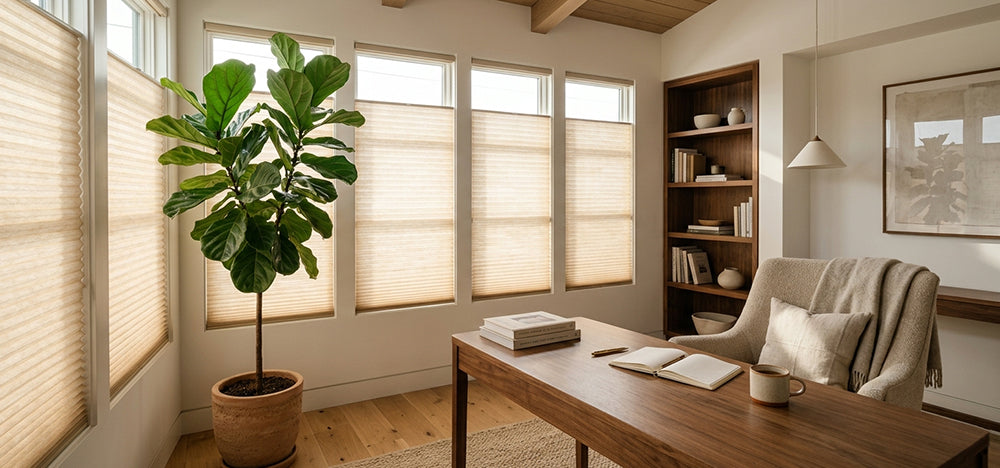
One of the most effective solutions available today is cellular shades, also known as honeycomb shades.
Unlike flat fabric shades or standard blinds, cellular shades are designed with built-in air pockets that trap air inside the structure. Since air acts as a natural insulator, this design helps reduce heat transfer through windows.
This allows cellular shades to:
- Keep rooms cooler during summer
- Retain warmth during winter
- Improve indoor comfort year-round
- Reduce reliance on heating and cooling systems
Because of their insulation-focused design, insulated window shades like cellular shades are often considered one of the best choices for energy efficiency.
Look for Fabric and Structure That Improve Thermal Performance
Not all cellular shades perform the same. Fabric type and internal structure both have a direct impact on insulation performance.
Blackout vs. Light Filtering Fabrics
One important consideration is the level of light control.
Light filtering cellular shades:
- Allow soft natural light into the room
- Reduce glare while maintaining brightness
- Offer moderate insulation performance
They work well in:
- Living rooms
- Kitchens
- Home offices
Blackout cellular shades, on the other hand, use denser fabrics that block significantly more light and heat.
Benefits include:
- Better room darkening
- Improved thermal insulation
- Reduced solar heat gain
- Enhanced privacy
This makes blackout shades especially effective for:
- Bedrooms
- Media rooms
- South- and west-facing windows
Because they reduce both light and heat penetration, blackout fabrics generally provide stronger energy-saving performance.
Single Cell vs. Double Cell Construction
Another important feature is the cellular structure itself.
Single cell shades contain one layer of honeycomb air pockets. They provide good basic insulation and a lightweight appearance.
Double cell shades use two layers of honeycomb pockets, creating additional trapped air and stronger insulation.
Compared to single cell designs, double cell shades typically offer:
- Better thermal performance
- Improved energy efficiency
- Enhanced noise reduction
- More stable indoor temperatures
For homeowners focused on maximizing insulation, double cell blackout cellular shades are often the strongest overall option.

Proper Fit and Window Coverage Matter
Even highly insulated shades can lose effectiveness if they do not fit properly.
Gaps around the edges of a window treatment allow air to move freely, reducing insulation performance and energy efficiency.
This is why custom sizing is important.
Custom window treatments help:
- Minimize light gaps
- Improve thermal sealing
- Enhance overall insulation performance
Precise fit becomes especially valuable for:
- Large windows
- Tall windows
- Skylights
- Specialty-shaped windows
These window types often experience the greatest heat gain and heat loss, making proper coverage essential.
Smart Automation Can Improve Energy Efficiency
Energy efficiency isn’t just about materials—it’s also about how window treatments are used throughout the day.
Many homeowners forget to adjust their shades consistently, especially during peak sunlight hours when insulation matters most.
This is where smart automation becomes valuable.
Motorized shades can automatically adjust based on schedules, sunlight, or room conditions, helping maintain a more efficient indoor environment without constant manual adjustments.
Automated shading can help:
- Reduce heat gain during hot afternoons
- Maintain cooler indoor temperatures
- Improve energy efficiency throughout the day
- Increase comfort and convenience
Modern smart shades can also integrate with:
- Voice assistants
- Mobile apps
- Smart home platforms
This allows homeowners to control shades remotely or create automated routines based on daily living patterns.
SmartWings Energy-Efficient Window Treatment Solutions
For homeowners looking to combine insulation, convenience, and smart living, SmartWings offers a more advanced approach to energy-efficient window treatments.
As a brand specializing in smart motorized window treatments, SmartWings designs solutions that focus not only on appearance, but also on comfort and energy performance.
SmartWings cellular shades are available in:
- Single cell and double cell structures
- Light filtering and blackout fabrics
- Custom sizing for improved insulation
- Specialty window solutions for unique spaces
For homeowners prioritizing thermal performance, double cell blackout cellular shades provide some of the strongest insulation benefits available.
SmartWings also integrates smart motor technology into its window treatments, allowing users to control shades through:
- Voice control
- Mobile apps
- Smart home automation systems
Automated scheduling allows shades to close during peak sunlight hours and reopen when natural light is desired, helping reduce heat gain while improving daily comfort.
By combining insulation-focused design with smart automation, SmartWings helps create homes that feel more comfortable, more energy efficient, and easier to manage throughout the year.
Conclusion
Choosing energy-efficient window treatments involves more than selecting a style you like. The most effective solutions combine insulation, proper structure, quality fabrics, precise fit, and smart functionality.
Among the many options available, cellular shades remain one of the strongest choices for improving energy efficiency and indoor comfort. Features like blackout fabrics, double cell construction, and custom sizing can further enhance performance.
When paired with smart automation, energy-efficient window treatments become even more effective by adapting to changing sunlight and daily routines automatically.
Whether your goal is to reduce energy costs, improve comfort, or create a more sustainable living environment, investing in the right window treatment can make a noticeable difference throughout your home.
Frequently Asked Questions
1. What are the most energy-efficient window treatments?
Cellular shades are widely considered one of the most energy-efficient options because their honeycomb structure helps reduce heat transfer through windows.
2. Do blackout shades help reduce heat?
Yes. Blackout shades use denser fabrics that reduce both light penetration and solar heat gain, improving indoor comfort during warmer months.
3. Are cellular shades good for insulation?
Yes. Their insulated honeycomb structure traps air and helps stabilize indoor temperatures year-round.
4. Do motorized shades help save energy?
They can. Automated scheduling allows shades to adjust throughout the day, reducing heat gain and improving energy efficiency without manual operation.
5. Are custom window treatments better for energy efficiency?
Yes. A precise fit helps minimize gaps around the window, improving insulation and overall thermal performance.


