
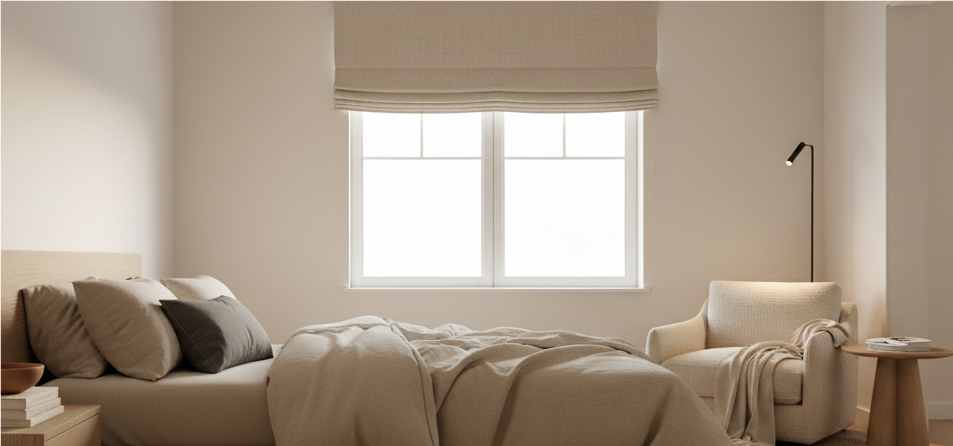

When winter arrives, many homes feel colder than expected—especially near windows.
You may notice:
Cold drafts near the glass
Rooms that never feel warm enough
Higher heating bills
The real issue is simple:
Windows lose heat much faster than walls, which is why they quickly become the weakest point in your home’s insulation. That means the real question isn’t whether you need window shades. It’s the type of shade that actually keeps your home warmer.
But here’s where most homeowners get stuck:
There are several types of shades available, and each one works very differently for winter comfort.
Why Cold Windows Are a Problem
Even with a well-heated home, windows remain the weakest point for heat retention.
Unlike walls, they allow indoor heat to escape much more easily, which directly affects how comfortable a room feels in winter.
That’s why areas near windows often feel noticeably colder, even when the heating is on.
In simple terms, the issue is not visibility or light. It’s heat escaping through the glass.
What Actually Makes a Shade Good for Winter?
Forget technical details—there is only one thing that really matters in winter performance:
Does it effectively trap heat inside the room?
Everything else is secondary.
Instead of focusing on multiple factors, what you are really comparing is how each shade handles heat retention.
In simple terms, winter performance comes down to:
How well it reduces heat loss
How much warm air does it keep inside
How effectively it blocks cold transfer from windows
The better a shade performs in these areas, the warmer your home will feel.
Now let’s see how different shade types compare in real use.
Best Shades for Cold Windows
Now that we’ve defined what matters most, heat retention, let’s compare how each shade type performs in real winter conditions.
1. Cellular Shades
Cellular shades are the strongest option for cold windows because they are specifically designed for insulation.
Performance summary:
Excellent heat retention
Strong reduction of heat loss
Stable indoor temperature
Best for:
Bedrooms
Living rooms
Large or drafty windows
Best choice when warmth and energy efficiency are the priority.

2. Roller Shades
Roller shades are designed for simplicity and light control, not insulation.
Performance summary:
Good at blocking sunlight
Limited impact on heat retention
Minimal insulation effect
Best for:
Home offices
Kitchens
Modern interior spaces
Best when design and light control matter more than warmth.

3. Roman Shades
Roman shades sit between style and performance.
Performance summary:
Moderate insulation (depends on fabric thickness)
Better warmth than roller shades
Softer, decorative appearance
Best for:
Bedrooms
Living rooms
Style-focused homes
A balanced option, but not the most efficient for insulation.

4. Layered Window Treatments
Layering shades with curtains creates an additional insulation barrier.
Performance summary:
Maximum heat retention potential
Multiple layers reduce heat loss
Best performance in extreme conditions
Best for:
Cold climates
Large glass windows
Rooms with significant heat loss
This is an advanced setup, not required for most homes.
Smart Shades in Winter: Are They Worth It?
Smart shades are not a different type of shade; they simply improve how your existing shades perform.
In winter, they help with:
Automatically closes at night to reduce heat loss
Opening during the day to capture natural warmth from sunlight
Preventing heat loss caused by forgetting to adjust shades
Think of smart shades as an upgrade to efficiency, not an insulation replacement.

Simple Decision Rule
If you still need a quick reference, here is the simplest way to decide:
Cold rooms → Cellular shades
Design-focused spaces → Roller shades
Balanced comfort → Roman shades
Maximum insulation → Layered system
For full comparison, refer to the table above.
Common Mistakes That Reduce Winter Performance
Even the best shades won’t work well if used incorrectly.
Mistake |
Why It Matters |
Choosing style over insulation |
Leads to poor heat retention |
Leaving gaps around windows |
Allows cold air leakage |
Keeping shades open at night |
Strong causes unnecessary heat loss |
Using thin decorative fabrics |
No real insulation effect |
Simple Habits to Improve Winter Comfort
You can improve warmth without changing your setup:
Close shades at sunset
Open them during sunny winter hours
Combine shades with curtains for extra insulation
Ensure proper installation to avoid gaps
These small habits can noticeably improve indoor comfort.
7. Common Questions Buyers Actually Ask
If you’re still unsure which shade to choose, here’s everything summarized in one simple comparison table:
Best Shades for Cold Windows
Shade Type |
Best For |
Heat Retention |
Key Strength |
Main Limitation |
Cellular Shades |
Bedrooms, living rooms, and cold climates |
Excellent |
Best insulation & energy savings |
Higher upfront cost |
Roller Shades |
Kitchens, offices, modern interiors |
Low |
Best for light control & simplicity |
Weak insulation |
Roman Shades |
Bedrooms, style-focused rooms |
Moderate |
Balance of comfort & style |
Not as efficient as cellular |
Layered System (Shades + Curtains) |
Extreme cold, large windows |
Maximum |
Highest insulation potential |
More complex setup |
Simple Rule to Decide
If your home feels cold in winter → Cellular shades
If you care more about design → Roller shades
If you want balance → Roman shades
If you want maximum warmth → Layered system


