
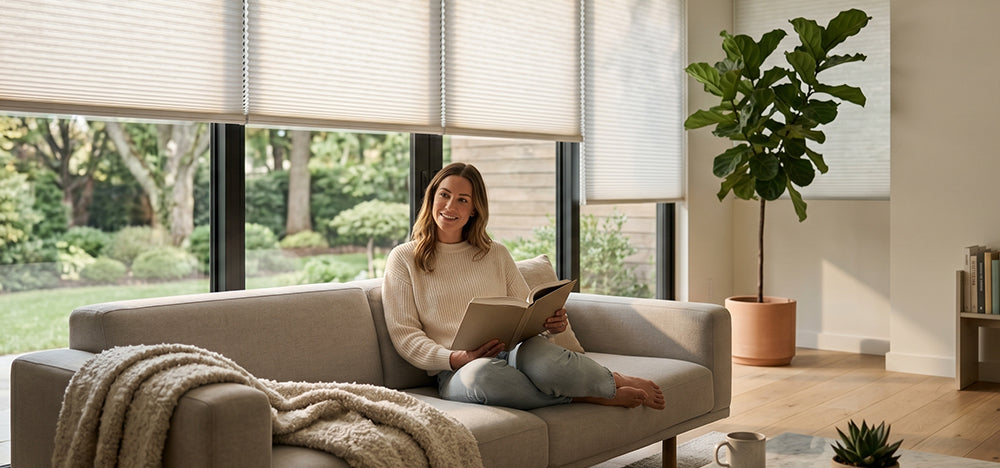

As spring turns into summer, keeping your home cool becomes a daily challenge. Sunlight pours through your windows, indoor temperatures rise, and your air conditioner starts working overtime.
Naturally, many homeowners begin asking:
Do cellular shades really save energy—or are they just another window covering option?
The answer is yes. But more importantly, they do it in a way that is both efficient and sustainable. When chosen and used correctly, cellular shades can significantly reduce heat transfer, improve indoor comfort, and support a more energy-conscious lifestyle.
Why Windows Are the Biggest Source of Energy Loss
Most homes are well insulated—except for one critical area: windows.
During warmer months:
- Solar heat enters directly through glass
- Rooms heat up quickly, especially in the afternoon
- Cooling systems must work harder to compensate
Even high-quality windows cannot fully prevent heat gain. Without proper window coverings, your home is constantly battling outdoor temperatures.
Traditional curtains or blinds may block light, but they do little to stop heat transfer.
This is where cellular window shades make a real difference.
What Are Cellular Shades?
If you're wondering what are cellular shades, the answer lies in their structure.
Also known as honeycomb cellular shades, these window treatments are designed with a unique layered construction that forms air pockets within the fabric.
Key features include:
- Honeycomb-shaped cells that trap air
- Built-in insulation layer between window and room
- Options for light filtering or full blackout
- Clean, modern appearance suitable for any space
Unlike flat fabric shades, cellular shades cordless or motorized options use this structure to actively reduce heat exchange.
Think of them as adding a thermal barrier to your windows—without changing the glass itself.
Do Cellular Shades Really Save Energy?
Yes—and the impact is noticeable.
The insulating design of cellular window shades helps:
- Reduce heat entering your home during summer
- Prevent cool air from escaping
- Lower overall energy consumption
This leads to:
- More stable indoor temperatures
- Less reliance on air conditioning
- Reduced monthly energy bills
Compared to standard blinds or curtains, honeycomb cellular shades are specifically engineered for energy efficiency.
How Do Cellular Shades Improve Insulation?
The key to their performance is simple: trapped air.
Each honeycomb cell acts as a small insulating pocket. Because air is a poor conductor of heat, it slows down the transfer of temperature between the outside and inside of your home.
Benefits include:
- Reduced heat gain during hot afternoons
- Improved temperature retention indoors
- Increased overall comfort
For even better performance, many homeowners choose double-cell designs, which provide an additional layer of insulation.
Which Types of Cellular Shades Are Best for Energy Savings?
Different styles of cellular shades offer different levels of performance depending on your needs.
Blackout Cellular Shades
Blackout cellular shades are designed to block nearly all incoming light.
They also:
- Reduce solar heat gain more effectively
- Provide maximum insulation
- Improve sleep quality in bedrooms
If energy savings is your top priority, cellular blackout shades are one of the most effective options available.
Light Filtering Cellular Shades
Light filtering cellular shades allow soft, diffused light into the room while still reducing heat.
They are ideal for:
- Living rooms
- Kitchens
- Home offices
These shades strike a balance between natural light and energy efficiency.
Levitate Cellular Shades
For homeowners who want more flexibility, top down bottom up cellular shades—like SmartWings’ Levitate design—offer precise control.
You can:
- Lower the shade from the top to let in light
- Keep the bottom covered for privacy
- Reduce direct sunlight without darkening the entire room
This targeted control helps minimize unnecessary heat exposure while maintaining comfort.
Specialty & Custom Cellular Shades for Unique Windows
Not all windows are standard.
Homes with:
often experience the most heat gain.
Custom cellular shades are designed to:
- Fit unique window shapes precisely
- Eliminate gaps that allow heat transfer
- Provide full coverage where standard shades cannot
This ensures energy efficiency across your entire home—not just standard windows.

Living a Greener Lifestyle with Cellular Shades
Energy efficiency isn’t just about lowering bills—it’s about creating a more sustainable way of living.
With cellular shades, the difference becomes part of your daily routine.
In the morning, natural light enters your space without bringing excessive heat.
By midday, your shades help block intense sunlight, keeping rooms naturally cooler.
In the evening, they help maintain indoor comfort without constant cooling.
Over time, this leads to:
- Reduced energy consumption
- Lower environmental impact
- A more balanced and comfortable home
Instead of constantly adjusting your thermostat, your windows begin working with you—not against you.
A Smarter Approach with SmartWings Cellular Shades
Energy efficiency becomes even more powerful when it’s automated.
SmartWings combines the insulating benefits of cellular shades with smart home technology, creating a solution that adapts to your lifestyle.
With motorized cellular shades, you can:
- Automatically adjust shades based on sunlight
- Schedule opening and closing times
- Optimize indoor temperature without manual effort
For example:
- Morning: shades open slightly to let in natural light
- Afternoon: shades close to reduce heat gain
- Evening: shades help retain indoor temperature
This automation ensures your home stays energy-efficient throughout the day.
SmartWings also offers:
- Cordless for a clean, safe design
- Custom sizing for better insulation
- Options for both light filtering and blackout cellular window shades
- Solutions for specialty window shapes
The result is a system that supports both energy savings and modern smart living—without adding complexity to your daily routine.
Conclusion
So, do cellular shades really save energy?
Yes—and they do so in a way that is practical, efficient, and long-lasting.
Their honeycomb structure creates a true insulating barrier, helping reduce heat transfer through your windows. In spring and summer, this means cooler interiors, lower energy use, and a more comfortable living environment.
When combined with smart features and custom design, cellular shades become more than just window coverings—they become part of a smarter, more sustainable home.
If your goal is to reduce energy costs while improving everyday comfort, cellular shades are a solution worth considering.
Frequently Asked Questions
1. Are cellular shades worth it for energy savings?
Yes. They are one of the most effective window treatments for reducing heat transfer and improving insulation.
2. Do cellular shades help in summer and winter?
Absolutely.
- In summer, they block heat from entering
- In winter, they help retain indoor warmth
They provide year-round energy efficiency.
3. What’s the difference between single cell and double cell shades?
- Single cell shades have one layer of air pockets and provide basic insulation
- Double cell shades have two layers, offering enhanced thermal performance
If energy efficiency is your priority, double cell options are the better choice.
4. Where are cellular shades most effective in a home?
They perform best in:
- Sun-facing windows
- Rooms with high temperature fluctuations
- Spaces where comfort and energy savings are equally important
5. Can motorized cellular shades be powered by a solar panel?
Absolutely. SmartWings motorized cellular shades are compatible with dedicated solar panels, providing a convenient, eco-friendly power source.


