
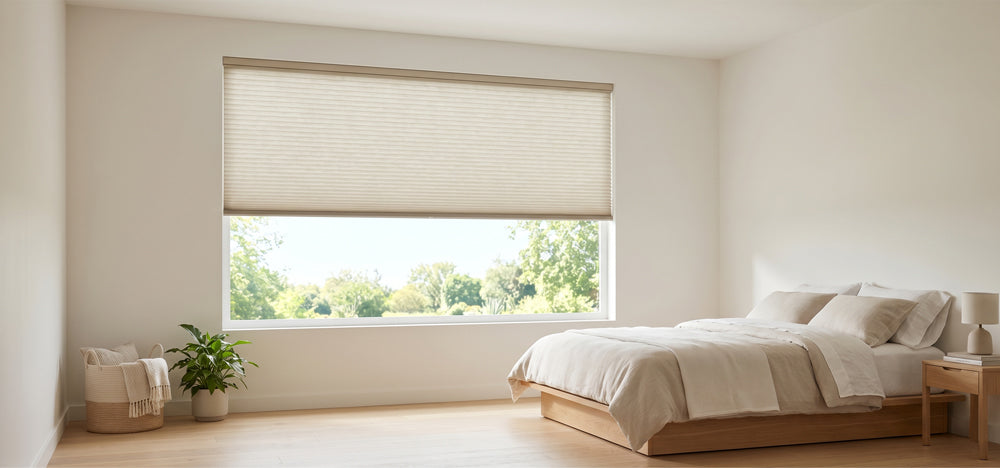

If you’re already thinking about the heat that comes with summer, you’re not alone. Many homeowners struggle with rooms that become uncomfortably warm during the day—especially those with large windows or direct sun exposure.
The challenge isn’t just comfort. Keeping your home cool often means running the air conditioner longer, which can quickly lead to higher energy bills.
The good news is that the right window treatments can make a noticeable difference. In this guide, you’ll learn why rooms overheat, why your choice of shades matters, and which window treatments work best for hot rooms—especially during the summer months.
Why Do Rooms Get So Hot in Summer?
Windows are one of the main sources of heat gain in a home. When sunlight passes through glass, it brings heat with it. That heat gets absorbed by floors, walls, and furniture, raising the overall indoor temperature.
Over time, this leads to:
- Warmer rooms during the day
- Faded furniture and flooring from UV exposure
- Increased reliance on air conditioning
- Higher energy consumption and electricity costs
Without proper window coverage, your home is constantly working against the sun.
Why Choosing the Right Window Treatment Matters
Window treatments aren’t just about style—they directly impact how your home feels and performs.
The right shades can help you:
- Reduce heat entering your space
- Improve indoor comfort without overusing AC
- Protect furniture and flooring from sun damage
- Adjust light and privacy based on each room’s needs
For example, bedrooms often benefit from blackout solutions for better sleep, while living spaces may need light-filtering options that reduce glare without darkening the room too much.
When dealing with hot rooms, choosing the right window treatment becomes a practical decision—not just a design one.
Best Window Treatment for Hot Rooms: Cellular Shades
Among all window covering options, cellular shades (also known as honeycomb shades) are widely considered one of the most effective solutions for heat insulation.
How Cellular Shades Reduce Heat
The key lies in their structure.
Cellular shades are designed with honeycomb-shaped cells that trap air inside the fabric. This creates a layer of insulation between your window and your room.
This structure helps:
- Reduce heat entering your home during summer
- Limit temperature fluctuations throughout the day
- Improve overall energy efficiency
Instead of letting heat pass through easily, cellular shades act as a thermal barrier—making your home easier to keep cool.
Key Benefits of Cellular Shades
Beyond insulation, cellular shades offer several advantages that make them ideal for hot environments.
Clean, Versatile Design
Their minimal, streamlined look fits a wide range of interior styles—from modern to traditional—without overwhelming the space.
Energy Efficiency and Cost Savings
By reducing heat gain, cellular shades decrease the need for constant air conditioning. Over time, this can help lower your energy bills.
Year-Round Performance
While they’re especially useful in summer, cellular shades also help retain warmth in winter, making them a long-term investment in comfort.
Motorized Convenience and Safety
With motorized cellular shades, you gain both ease of use and added safety:
- Cordless design for homes with children and pets
- Control via remote, app, or voice assistant
- Automated schedules to adjust shades throughout the day
Motorization is especially helpful for large windows or frequently used rooms, ensuring consistent and effortless operation.
Recommended Cellular Shades for Hot Rooms
Different room types and window conditions may require different configurations. Here are some of the most effective options:
1.Light Filtering Cellular Shades
These allow natural light in while reducing glare and heat—ideal for living rooms and shared spaces.
2.Blackout Cellular Shades
Best for bedrooms or rooms with intense sun exposure. They block more light and provide stronger insulation.
3.Top-Down Bottom-Up (TDBU) & Levitate Shades
Perfect for balancing privacy and daylight. You can let in light from the top while keeping the lower portion covered—useful for street-facing windows.
4.Day & Night Cellular Shades
Combine two fabrics (light filtering + blackout) in one system, giving you flexibility throughout the day.
5.Specialty Shapes: Trapezoid & Arched Shades
Custom-fit solutions for uniquely shaped windows, ensuring no gaps where heat can enter.
6.Skylight Cellular Shades
Designed for overhead windows where heat exposure is often the strongest. These help reduce direct sunlight and improve temperature control.
SmartWings Cellular Shade Options
SmartWings offers multiple cellular shade series designed to meet different needs.
Hazel Cellular Shades
- Compact 1.50" honeycomb structure
- Ideal for narrow or smaller windows
- External battery stick for easier charging
A practical, user-friendly option for everyday spaces.
Nowa Cellular Shades
- Larger 1.77" honeycomb structure for enhanced insulation
- Built-in lithium battery for a cleaner look
- Improved energy efficiency and sound absorption
A strong choice for homeowners prioritizing performance and design.
Levitate & Day & Night Shades
- Flexible light and privacy control
- Dual-function designs for changing needs throughout the day
- Ideal for rooms with varying sunlight conditions
Skylight, Trapezoid & Arched Shades
- Designed for specialty windows
- Maintain insulation while preserving architectural style
- Custom-fit for maximum efficiency
Additional Tips to Keep Hot Rooms Cooler
Even with the right shades, a few extra strategies can improve results.
Layer Your Window Treatments
For maximum insulation, consider combining blackout cellular shades with drapery. This layered approach creates an additional barrier against heat, especially for large windows.
Choose Double-Cell Fabrics
Double-cell (dual honeycomb) shades provide better insulation than single-cell options, making them ideal for hot climates or sun-facing rooms.
Select Lighter Colors
Lighter fabrics reflect more sunlight, helping reduce heat absorption compared to darker shades.
Conclusion
Hot rooms can make summer uncomfortable and expensive—but the right window treatments can make a meaningful difference.
Among all options, cellular shades stand out as one of the best solutions for reducing heat, improving energy efficiency, and maintaining indoor comfort.
By choosing the right configuration—whether it’s blackout fabrics, double-cell construction, or motorized control—you can create a cooler, more comfortable home without relying as heavily on air conditioning.
If you’re preparing for the summer season, upgrading your window treatments may be one of the smartest and most effective changes you can make.


