
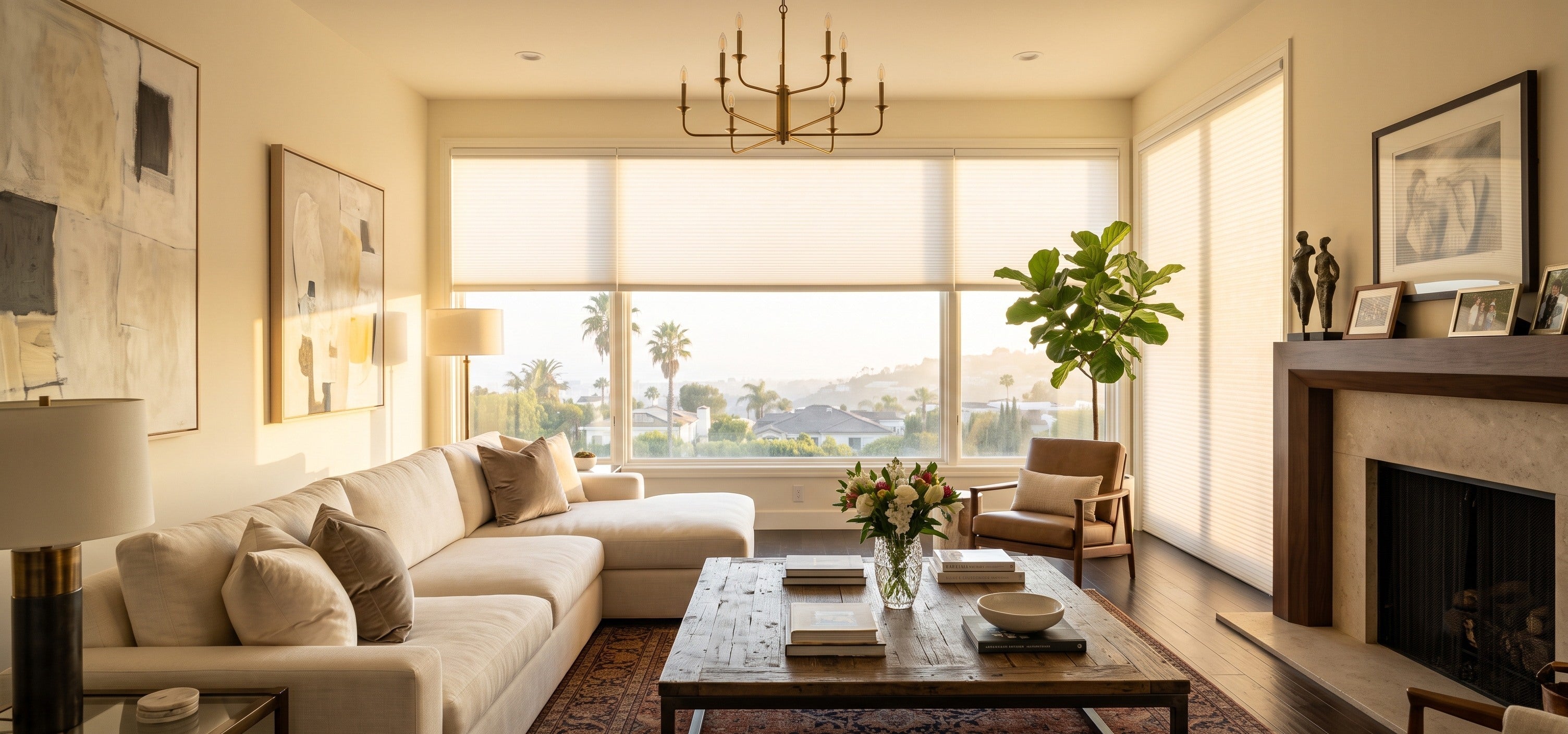

A west-facing window is lovely in the morning and demanding by late afternoon. As the sun drops, it comes in at a low angle, straight into your eyes, across the TV, and onto your desk, and the room warms up quickly in the process. It is one of the most common comfort challenges in a home.
The encouraging part is that you do not have to choose between a dark room and a bright, uncomfortable one. With the right shade and a little automation, a west-facing room can stay cool, glare-free, and still connected to the view. SmartWings offers several fabrics suited to exactly this, along with motors that can handle the afternoon sun on their own.

Why West-Facing Windows Are Different
Not all sun is the same. Understanding what a west window actually does through the day is what tells you which shade to reach for.
A west-facing window catches the sun for a shorter but more intense stretch, from early afternoon to sunset. Because the sun sits low in the sky by then, the light comes in at a sharp, horizontal angle that reaches deep into the room, rather than the higher overhead light a south window gets.
That low-angle afternoon sun creates three separate problems, and a good solution addresses all of them:
Glare on screens, glossy surfaces, and light-colored furniture, right when many people are working or watching TV.
Heat that builds through the afternoon, so the room can feel noticeably warmer than the rest of the home.
Fading of floors, furniture, and fabrics from prolonged direct sun over time.

Match the Shade to the Problem
Because west windows create more than one issue, the best choice depends on what bothers you most in that particular room.
For glare and keeping the view, choose solar shades. Solar shades use an open-weave fabric that works like sunglasses for the window. They cut glare and filter the harsh light while keeping your view of the outdoors, which makes them a natural fit for living rooms, sunrooms, and home offices where you still want daylight and a connection to outside. A tighter weave gives stronger glare control, while a more open one keeps more of the view.
For heat, choose cellular shades. Cellular shades have a honeycomb structure that traps a layer of air at the window, adding insulation between the hot glass and the room. That air pocket slows heat coming in during the afternoon and helps the space stay more comfortable, which suits family rooms and bedrooms that overheat late in the day.
For a bedroom or media room, choose blackout. Where the afternoon sun disrupts sleep or screen time, a blackout roller shade gives the strongest light control, keeping the room dark and calm when you need it.
For both view by day and darkness later, layer two fabrics. A dual roller shade puts a light-filtering layer and a blackout layer on one window, so you can keep the view during the afternoon and switch to full darkness in the evening without changing anything on the wall.
Fit and Color Make a Difference
With a west window, the details of the shade matter as much as the type, because low-angle light finds every gap.
A shade that fits the window closely covers the glass properly and limits the light slipping in around the edges, which is where a made-to-measure shade helps. An outside mount, sitting above and beyond the opening, covers more of that edge area than an inside mount and is worth considering when the afternoon sun is strong.
Color plays a part too. Lighter fabrics reflect more of the sun and can help a room stay cooler, while a darker solar fabric tends to preserve the outside view more clearly during the day. It is a small choice that shifts the balance between comfort and view.

Let the Shade Handle the Sun for You
The hardest thing about a west window is timing. The glare and heat arrive in the afternoon, often when no one is home to lower the shade, so the room is already hot by the time you get to it. This is where automation genuinely earns its place.
With a motorized shade, you can set it to lower before the sun hits its peak and rise again once it has passed, so the room stays ahead of the heat on its own. Pair it with a Smart Sunlight Sensor and the shade responds to how bright it actually is, lowering when the sun is strong and opening when it softens.
SmartWings shades are cordless and quiet, and they are compatible with Apple Home, Alexa, Google Home, and SmartThings. Connecting through Matter over Thread uses a Thread Border Router, such as a HomePod mini or Apple TV 4K, so a west-facing room can be part of the same routine as the rest of your home.

Putting It Together by Room
A whole home rarely needs the same answer at every west window, so it helps to think room by room.
In a west-facing living room, a solar shade keeps the view and cuts glare on the TV, and you can add drapery over it for evening privacy. In a west-facing bedroom, a cellular or blackout shade handles both the heat and the light for rest. In a west-facing home office, a lower-openness solar shade takes the glare off screens while keeping the room bright enough to work.

Choosing Your West-Facing Window Shades With SmartWings
The simplest way to decide is to name the main problem in the room, then match the shade to it: solar for glare and view, cellular for heat, blackout for a dark bedroom, and a dual shade when you want both view and darkness. Add a motor, and the shade manages the afternoon for you.
All SmartWings shades are made to your window's measurements, with fabric, color, and motor configurable to the room. To see how a solar or cellular fabric handles the light in your space, order fabric swatches and check them against your own afternoon sun before deciding.
FAQ About Shades for West-Facing Windows
Q1: What is the best type of shade for a west-facing window?
It depends on the main issue. Solar shades are best for glare while keeping the view, cellular shades are best for heat, and blackout shades are best for a bedroom that needs darkness. Many rooms do well with a combination.
Q2: How do I reduce heat from a west window without making the room dark?
Solar and cellular shades both reduce heat while keeping the room usable. A solar shade filters the sun while preserving the view, and a cellular shade insulates against heat while still allowing a light-filtering option, so neither turns the room dark.
Q3: Will shades stop my furniture and floors from fading?
They help considerably. Solar and light-filtering fabrics reduce the direct sun that causes fading, and lowering the shade during the strongest afternoon hours, easy to automate, limits how much prolonged exposure your interiors get.
Q4: Should I use an inside or outside mount for a west-facing window?
An outside mount covers more of the area around the window and reduces the light that slips in at the edges from low-angle sun, so it is often the better choice when afternoon glare is strong. An inside mount gives a cleaner, more built-in look where the sun is milder.
Q5: Can shades lower automatically when the afternoon sun comes in?
Yes. A motorized SmartWings shade can be scheduled to lower before the peak sun and rise afterward, and paired with a Smart Sunlight Sensor it responds to actual light levels, so the room stays comfortable even when no one is home.
Q6: Does shade color affect how cool the room stays?
It can. Lighter fabrics reflect more sunlight and tend to keep a room a little cooler, while darker solar fabrics preserve the outside view more clearly during the day, so the choice balances comfort against view.


