
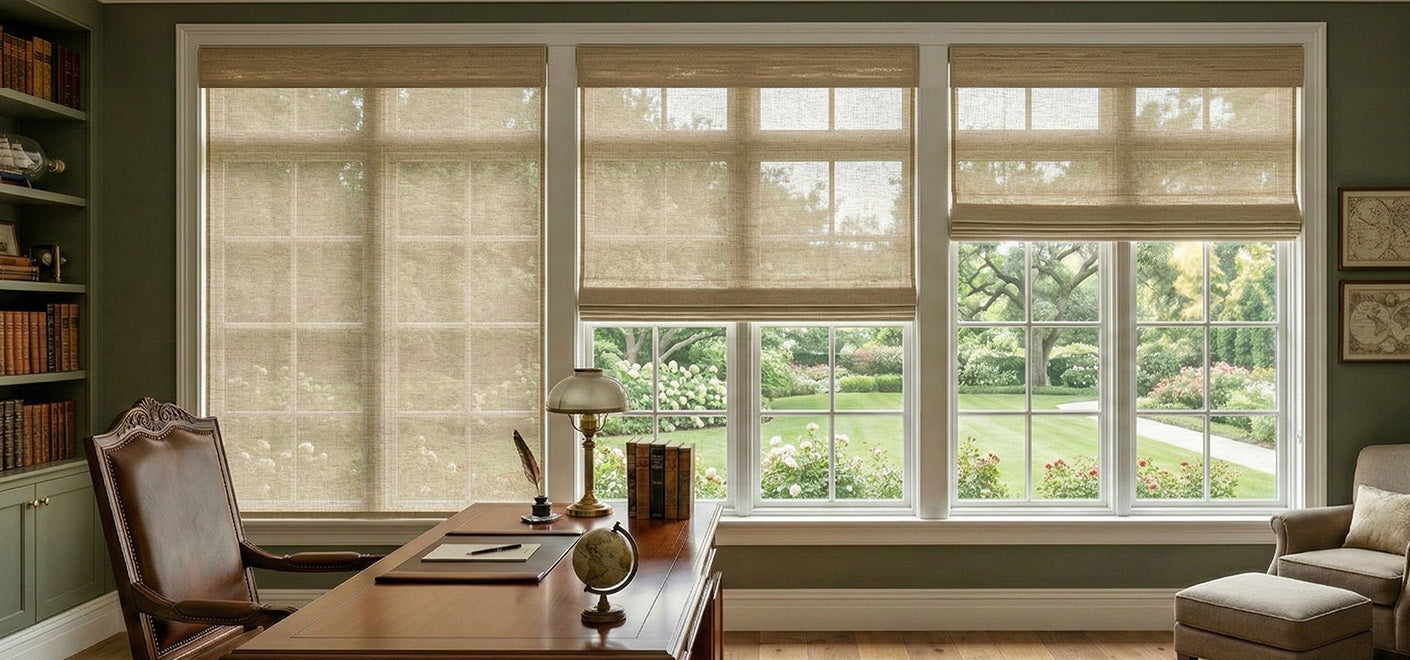

As homeowners move into spring 2026, window treatments are shifting toward designs that feel lighter, more natural, and more connected to smart home living. Motorized woven wood shades have become an increasingly popular option because they combine organic textures with modern automation.
If you’re looking for a window covering that softens sunlight, supports a natural aesthetic, and integrates with your smart home system, motorized woven wood shades may be a strong fit. This guide explains what they are, why they’re gaining popularity, their real benefits and drawbacks, and how to choose the right option for your home.
What Are Motorized Woven Wood Shades?
Motorized woven wood shades are window coverings made from natural materials such as straw, bamboo, jute, or other plant-based fibers, powered by an internal motor instead of a manual cord. They operate through a roller mechanism that allows the shade to raise or lower smoothly using a remote, smartphone app, voice assistant, or automation schedule.
Unlike synthetic fabric shades, woven wood shades are crafted from breathable, eco-friendly materials that create a soft, organic look while still providing functional light control. Depending on the liner and opacity level you choose, they can filter natural light, enhance privacy, or deliver near-blackout performance.
Most modern motorized woven wood shades also support multiple motor options, allowing you to connect them to smart home platforms and control them alongside lighting, thermostats, and routines. This combination of natural texture and smart functionality is what sets them apart from traditional woven shades.
Why Motorized Woven Wood Shades Are Becoming a Popular Choice?
A Natural Look That Fits Spring and Modern Interiors
As interior trends in 2026 continue to favor organic materials and calming spaces, woven wood shades align perfectly with this design direction. Their natural texture adds warmth without making a room feel heavy, making them especially suitable for spring décor, coastal styles, Japandi interiors, and minimalist homes.
The soft shadows created by sunlight passing through the woven fibers also produce a unique visual effect that many homeowners find more inviting than the flat light diffusion of synthetic shades.
Smart Homes Are Becoming the New Standard
More households are adopting smart speakers, automation routines, and connected devices. In this environment, motorized woven wood shades feel like a natural upgrade rather than a luxury feature. Instead of manually adjusting shades throughout the day, you can schedule them to open in the morning and close in the afternoon to manage glare and privacy automatically.
For homes already using smart ecosystems, automated shades help create a more cohesive and responsive living environment.
Convenience for Everyday Living
Traditional woven wood shades can be harder to adjust frequently, especially on large or tall windows. Motorization removes the need for cords and manual lifting, allowing you to control multiple shades instantly with minimal effort. This is particularly useful in living rooms with wide windows, bedrooms where you want quick light adjustment, or hard-to-reach spaces.
Cordless Designs Match Modern Safety Preferences
As safety standards continue to shift toward cordless window treatments, motorized woven wood shades provide a cleaner and safer solution for households with children or pets. With no exposed cords, they reduce potential hazards while maintaining a sleek, uncluttered appearance.

What Are the Benefits of Motorized Woven Wood Shades?
Soft Light Filtering with Natural Texture
One of the standout advantages of woven wood shades is their ability to diffuse sunlight gently. Instead of blocking light completely, the natural weave allows a warm, filtered glow to enter the room, reducing harsh glare while preserving brightness. This makes them ideal for living rooms, dining areas, and home offices where you want comfortable natural light.
Customizable Opacity and Liners
Motorized woven wood shades are available in multiple opacity options to suit different rooms and needs. Lighter configurations can filter around 50% of sunlight for a bright yet soft atmosphere, while higher-opacity liners (such as 70% or 100% blackout) provide stronger privacy and better light blocking for bedrooms or media rooms. This flexibility allows you to tailor each space without sacrificing aesthetic consistency.
Smart Control and Automation
With compatible smart motors, you can operate your shades through apps, voice assistants, remotes, or automated schedules. This allows you to adjust light and privacy without interrupting your routine. For example, you can program shades to close during peak afternoon sun to reduce heat and reopen in the evening to bring in natural light.
Eco-Friendly and Breathable Materials
Woven wood shades are typically crafted from natural, non-toxic materials that support a more sustainable home environment. Their breathable structure promotes air circulation, helping interiors feel fresher compared to heavier synthetic window coverings.
Energy and Comfort Support
While not as insulating as cellular shades, woven wood shades still help regulate indoor comfort by reducing direct solar heat gain and softening sunlight. When paired with liners, they can also improve temperature stability and reduce reliance on air conditioning during warmer spring and summer months.
Timeless Aesthetic Versatility
From modern minimalist homes to rustic or coastal interiors, woven wood shades complement a wide range of décor styles. Their neutral tones and organic texture act as a design bridge, blending easily with wood furniture, linen fabrics, and seasonal décor.
Potential Drawbacks of Motorized Woven Wood Shades
Higher Initial Cost Than Manual Options
Motorized woven wood shades generally cost more than manual versions due to the built-in motor and smart technology. Additional factors such as custom sizing, liner selection, and smart motor compatibility can further influence the total price.
Natural Materials Have Visible Variations
Because woven wood shades use natural fibers, slight color variations, texture differences, or small gaps in the weave are normal. While many homeowners appreciate this organic character, it may not appeal to those who prefer a perfectly uniform look.
Light Gaps and Limited Full Blackout Without Liners
On their own, woven wood shades are designed primarily for light filtering rather than complete darkness. If full room darkening is required, adding a blackout liner is usually necessary, especially for bedrooms or media rooms.
Maintenance and Care Requirements
Natural woven materials require gentle maintenance. Dust accumulation can occur within the weave, and cleaning typically involves light vacuuming or dusting rather than deep washing. Compared to synthetic roller shades, they may need slightly more careful upkeep.
Dependence on Power for Motorized Operation
Like all motorized shades, these systems rely on a power source. Rechargeable battery motors require periodic charging, while hardwired systems depend on your home’s electrical setup. Planning the power solution in advance helps ensure smooth long-term use.
Considerations When Choosing Motorized Woven Wood Shades
Light Control and Room Function
Start by thinking about how each room is used. Living rooms and kitchens often benefit from light-filtering woven wood shades that maintain brightness while reducing glare. Bedrooms, on the other hand, may require blackout liners for better sleep and privacy. Matching opacity levels to room function ensures better comfort throughout the day.
Smart Home Compatibility
Before selecting a motor, consider which smart home platform you already use. Different smart motors are designed for different ecosystems, so choosing one that aligns with your existing setup allows smoother automation and centralized control of your shades alongside other smart devices.
Window Size and Placement
Large windows, wide openings, and hard-to-reach areas are where motorized woven wood shades provide the most value. Accurate measurement is essential to ensure proper fit, smooth operation, and consistent alignment. Custom sizing may be especially important for oversized or uniquely shaped windows.
Material Style and Color Selection
Since woven wood shades are highly visual, their texture and tone significantly impact your interior design. Lighter natural tones create an airy spring feel, while deeper wood hues add warmth and depth. Choosing a finish that complements your flooring, furniture, and wall colors will help achieve a cohesive look.
Power Source and Installation Planning
You should also decide between rechargeable battery motors and hardwired systems. Battery-powered options are easier to install and ideal for retrofits, while hardwired solutions are better suited for new builds or fully automated homes. Planning installation early can prevent future adjustments or additional costs.
Conclusion
Motorized woven wood shades offer a distinctive combination of natural aesthetics, smart convenience, and flexible light control that aligns well with modern 2026 home trends. They are especially suitable for homeowners who want an organic design element without sacrificing automation and everyday ease of use.
While the higher upfront cost, natural material variations, and liner considerations are important factors, the long-term benefits—such as cordless safety, smart home integration, and timeless style—make them a worthwhile investment for many households.
If you value breathable materials, soft filtered light, and seamless smart control, motorized woven wood shades can be an excellent choice that enhances both the comfort and visual harmony of your home throughout spring and beyond.


