
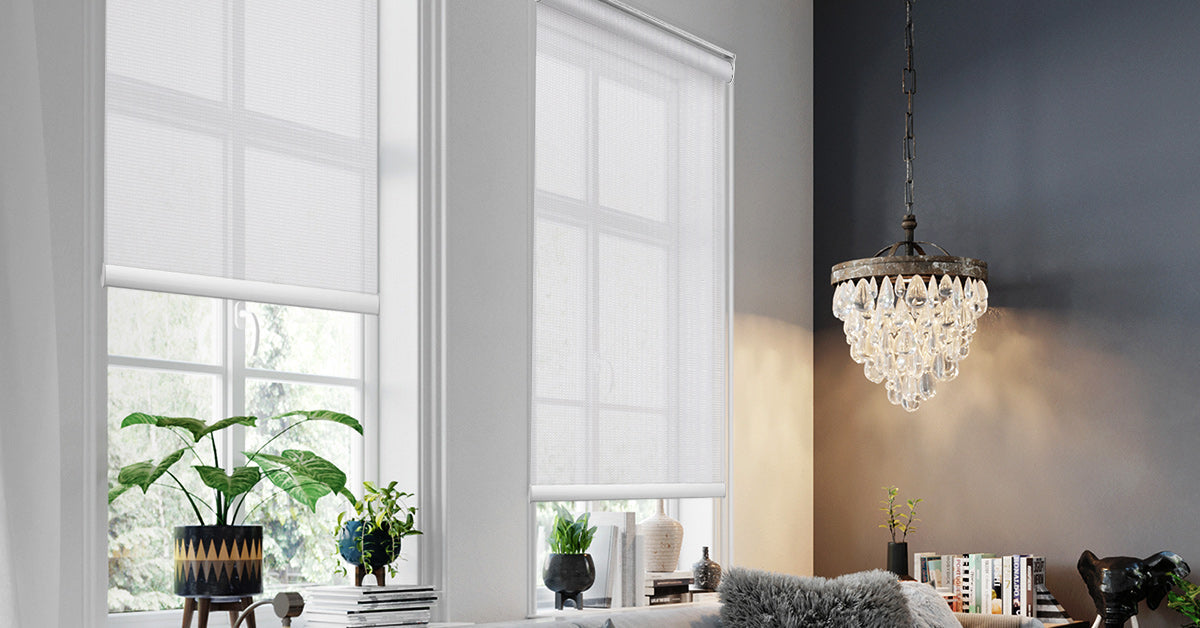

Upgrading to motorized smart blinds is about more than just skipping the morning routine of pulling cords.
The right window treatment shapes how well you sleep, how comfortable your home feels through the seasons, and how seamlessly your living space responds to your daily life.
As smart home technology becomes part of how more families live, motorized blinds have moved from a luxury add-on to a genuinely practical investment. But with so many options available, knowing what to look for — and what actually matters in daily use — makes all the difference.
SmartWings blinds are built around a few things that tend to matter most: precision custom sizing, whisper-quiet motors, broad smart home compatibility, and power options that fit how your home is set up.
This guide walks through each of those areas so you can decide whether SmartWings is the right fit for your home — and which product is right for your windows.
Why It's Worth Choosing Carefully
A motorized blind opens and closes multiple times every day. It shapes your sleep environment, your energy use, and the light in every room you live in.
That kind of daily presence means the right choice pays off consistently — and the wrong one makes itself known just as often.
Three things are worth evaluating before committing to any motorized blind: whether it integrates reliably with your existing smart home setup, how much ongoing maintenance it requires, and whether the build quality holds up to real everyday use.
SmartWings addresses all three: wide protocol compatibility across major smart home platforms, flexible power options that eliminate or simplify charging, and custom precision down to ⅛ of an inch. Here's how each of those plays out in practice.
What Makes SmartWings Blinds Stand Out
Smart Home Compatibility Across All Major Platforms
SmartWings motors are available in four protocols, each designed to work with a different smart home setup:
Matter over Thread — If your goal is to control your blinds through Apple HomeKit, Amazon Alexa, and Google Assistant all from one system, Matter is the most direct path to get there.
It runs on your local network, which means your blinds respond to commands without routing through a third-party cloud server.
That translates to faster response times and reliable operation even when your internet is down.
You'll need a Thread border router to get started — if you already own an Apple TV 4K (3rd gen, 128GB), HomePod mini, or HomePod (2nd gen), you already have one built in.


SmartWings Buying Tip:
Some TDBU-structure products — including the Levitate, Day/Night, and their corresponding Skylight variants — are not yet compatible with Samsung SmartThings or Homey.
If either of those is part of your setup, check for compatibility updates before ordering.
Zigbee — A solid choice if you're already running a Zigbee coordinator through SmartThings, Home Assistant, Hubitat, or a similar platform.
Your blinds join your existing Zigbee network directly, no additional bridge required. Theoretical signal range runs around 10–30 meters, and the network can be extended through other Zigbee devices like smart bulbs or plugs.
SmartWings Buying Tip:
Zigbee motors are not compatible with TDBU-structure products (Levitate, Day/Night, and their Skylight variants).
Z-Wave 800 LR — Best suited for larger homes or spaces with complex wall structures where signal range matters.
Theoretical coverage reaches 20–40 meters, with Mesh support for further extension. Works cleanly within existing Z-Wave ecosystems.
A note on real-world range: signal distances are affected by wall materials, metal structures, and interference from other devices.
SmartWings blinds function as end devices — they receive and respond to signals but don't act as repeaters within the network.
Keeping them within reasonable proximity to your hub or Thread border router helps maintain a reliable connection.

Quiet Motors, Day and Night
SmartWings motors operate at a noise level as low as 45-50dB, quiet enough that you won't notice them running. That's not a small thing in a bedroom, a nursery, or a home office during a call.
The quiet operation isn't a premium feature reserved for one product line — it's consistent across the range.
Three Power Options, Built Around How Your Home Is Set Up
Battery-Powered — The most flexible option, and the one that works in virtually any home without any electrical work.
The built-in lithium battery lasts approximately 4–6 months under normal use (one to two open/close cycles per day).
When it's time to recharge, plug in the charging cable for 6–10 hours — similar to charging a phone. No wiring, no electrician, no disruption to your walls or ceilings.
Compatible with a Solar Panel that keeps the battery topped up daily, which can effectively eliminate manual charging for south- or west-facing windows with consistent sun exposure.
Hardwired (AC/DC) — The right choice for new construction or large-format windows where battery charging isn't practical.
Wiring needs to be run during the build phase, before drywall goes up. AC motor connections must be completed by a licensed electrician at a junction box. Once installed, there's nothing to charge — though the blinds won't operate during a power outage.
PoE Matter — A Cat5 or Cat6 ethernet cable carries both power and data in a single run, which means no separate power line is needed alongside your network cable.
Requires a PoE switch to supply power through the cable. The motor includes a built-in lithium battery, so the blind continues to function even during a brief power interruption.
Combining PoE's stable wired connection with Matter's local control makes this a strong option for high-end residential builds or commercial installations where consistency and centralized management matter.
SmartWings Buying Tip:
PoE Matter is currently available for the following products: Roller Shades, Cellular Shades 45 (Nowa & Helios), Zebra Shades, Woven Wood Shades, Dual Shades (standard version), and Roman Shades.

Custom Sizing to ⅛ of an Inch — Including Specialty Windows
Every SmartWings blind is cut to order at ⅛-inch precision, which matters most for inside-mount installations where the fit needs to be exact to minimize light gaps around the frame.
For windows that fall outside standard shapes, SmartWings offers three dedicated solutions:
Skylight Shades — Designed for vertical, sloped, and horizontal window orientations.
Available in a standard single-track version and TDBU dual-track variants. Measurement is straightforward: width and height, the same as a standard blind. Windows outside the listed size range can be quoted via email.
Trapezoid Cellular Shades — Built for windows where the upper portion is triangular.
Requires three measurements: bottom width, tall-side height, and sloped-side length. A photo of the window is also required at checkout for factory verification.
Arched Cellular Shades — The standard option covers true semicircle arches; just provide the base width and arch height, along with a window photo.
Non-semicircle arch shapes are available as custom orders — reach out to SmartWings directly by email.
For any specialty window that falls outside the dimensions listed on the website, SmartWings can be contacted by email for a custom quote.
Energy Efficiency: How Cellular Shades Actually Work
Among all SmartWings product lines, Cellular Shades are the ones built specifically with insulation in mind — and it's worth understanding why.
The honeycomb cross-section of a cellular shade traps a layer of still air inside each cell. That air pocket acts as a thermal buffer:
In summer, it slows the transfer of heat from warm window glass into your living space;
In winter, it reduces the heat loss that happens when warm interior air meets cold glass. The effect is the same principle used in building insulation — just applied at the window.
When combined with automated scheduling — closing shades during peak afternoon heat in summer, keeping them shut on cold winter nights — the efficiency gains become more consistent than manual operation allows.
Actual energy savings vary based on window area, local climate, and your home's existing insulation.
Other product lines like Roller Shades and Zebra Shades are designed primarily for light control and privacy. They don't provide the same thermal performance, so if insulation is a priority, Cellular is the right direction.
Full Product Overview
Product |
Compatible Motor Protocols |
Primary Use |
| Roller Shades | Standard / Zigbee / Z-Wave / Matter / PoE Matter | Light control, blackout |
| Cellular Shades 45 — Nowa & Helios | Standard / Zigbee / Z-Wave / Matter / PoE Matter | Insulation, blackout |
| Cellular Shades 38 — Hazel | Standard / Zigbee / Z-Wave / Matter / PoE Matter | Insulation, blackout |
| Levitate (TDBU) | Standard / Z-Wave / Matter | Top-down bottom-up light and privacy control |
| Day/Night (TDBU) | Standard / Z-Wave / Matter | Switchable day and night light control |
| Skylight Shades — single track | Standard / Zigbee / Z-Wave / Matter | Vertical, sloped, horizontal windows |
| Skylight Shades — dual track TDBU | Standard / Z-Wave / Matter | Vertical, sloped, horizontal windows |
| Trapezoid Cellular Shades | Standard / Zigbee / Z-Wave / Matter | Triangular-top specialty windows |
| Arched Cellular Shades | Standard / Zigbee / Z-Wave / Matter | Semicircle and arch specialty windows |
| Zebra Shades | Standard / Zigbee / Z-Wave / Matter / PoE Matter | Day/night light filtering |
| Woven Wood Shades | Standard / Zigbee / Z-Wave / Matter / PoE Matter | Natural texture, diffused light |
| Dual Shades | Standard / Zigbee / Z-Wave / Matter / PoE Matter (standard version) | Flexible light and blackout layering |
| Roman Shades | Standard / Zigbee / Z-Wave / Matter / PoE Matter | Fabric look, blackout |
| Outdoor Shades | Standard / Zigbee / Z-Wave / Matter | Sun and glare control outdoors |
| Drapery & Curtain | Standard / Zigbee / Z-Wave / Matter | Large windows, fabric drape style |
Choosing the Right Motor Protocol
Matter — Start here if you're building fresh or want your blinds to work across Apple HomeKit, Amazon Alexa, and Google Assistant without juggling multiple apps. Local control means faster response and no cloud dependency.
A Thread border router is required; many Apple and Google devices already include one.
Zigbee — The natural fit if you're already running a Zigbee-based hub. Your blinds join the existing network directly. Note that TDBU-structure products are not available with Zigbee motors.
Z-Wave 800 LR — Choose based on the Z-Wave version your current system uses. Both integrate into existing Z-Wave networks and offer strong signal range for larger spaces.
PoE Matter — Worth considering for new builds or commercial spaces where Cat5/Cat6 cabling is already planned. Combines stable wired power delivery with Matter's cross-platform local control. Check the supported product list above before specifying.
A Few Things to Know Before You Order
1.Measurements can't be changed once production has begun.
If you realize an error after placing your order, please contact us as soon as possible before production starts. Because every blind is cut to your specifications, it's worth taking time with the measuring process. For inside-mount installations, measure width at the top, middle, and bottom of the frame and use the narrowest figure.
Trapezoid and Arched shades require a window photo at checkout. SmartWings' How to Measure guide covers every product type in detail.
2.Installation is designed for DIY.
Most products are installed using brackets secured with screws, which require drilling. AC hardwired motors are the exception — those connections must be made by a licensed electrician at a junction box.
For TDBU products using a Standard motor, the blind is compatible with Smart Link Pro only, not the standard Smart Link hub.
SmartWings installation steps can be found in the official guide: How to Install SmartWings Blinds & Shades
3.Plan your order timeline accordingly.
SmartWings blinds are made to order, so delivery takes longer than off-the-shelf products.
If you're working toward a move-in date or renovation deadline, factor that lead time into your planning.
The Bottom Line
SmartWings delivers on the things that make a motorized blind genuinely worth living with: quiet operation, accurate custom fit, and smart home integration that works the way you expect it to.
For energy efficiency, Cellular Shades are the clear choice. For flexible light control, Zebra Shades and Roller Shades cover most situations well.
For spaces that need both privacy and natural light at the same time, the TDBU structure of the Levitate or Day/Night shades offers a level of control that standard blinds can't match.
And for new builds or commercial spaces where wired infrastructure is already planned, PoE Matter brings together stable power delivery and local smart control in a single cable run.
The right place to start is matching your motor protocol to what you already have — or deciding what you want your setup to look like — and going from there.
Frequently Asked Questions
Will SmartWings blinds still work if my internet goes down?
Matter and Zigbee motors can respond to local commands when paired with a compatible hub or Thread Border Router that supports local control, such as an Apple HomePod mini or Samsung SmartThings hub.
PoE Matter motors include a built-in battery, so brief power interruptions to the PoE switch won't immediately stop the blind from functioning.
What does TDBU mean, and which products have it?
TDBU stands for Top-Down Bottom-Up — the blind can lower from the top of the frame or raise from the bottom, independently.
This lets you bring in natural light from the upper portion of a window while keeping the lower section covered for privacy.
SmartWings TDBU products include the Levitate, Day/Night, and their dual-track Skylight variants.
Is the solar panel option worth it?
For south- or west-facing windows with reliable sun exposure, the solar panel keeps the battery topped up passively and can make manual recharging largely unnecessary.
For north-facing windows or spaces with limited light, the standard rechargeable battery with a 4–6 month cycle is the more predictable option.
Are Cellular Shades worth the higher price for energy savings?
If thermal performance is part of what you're after, yes. The honeycomb structure provides meaningful insulation that Roller or Zebra shades simply don't offer.
If your main goal is light control or a clean aesthetic, those options deliver strong value at a lower price point.
How do I order a specialty window shade?
Trapezoid and Arched shades can be ordered directly on the SmartWings website — just follow the specific measurement instructions for each and upload a window photo at checkout.
Skylight Shades are also available directly on the site. For any window that falls outside the listed size ranges, contact SmartWings by email for a custom quote.


