
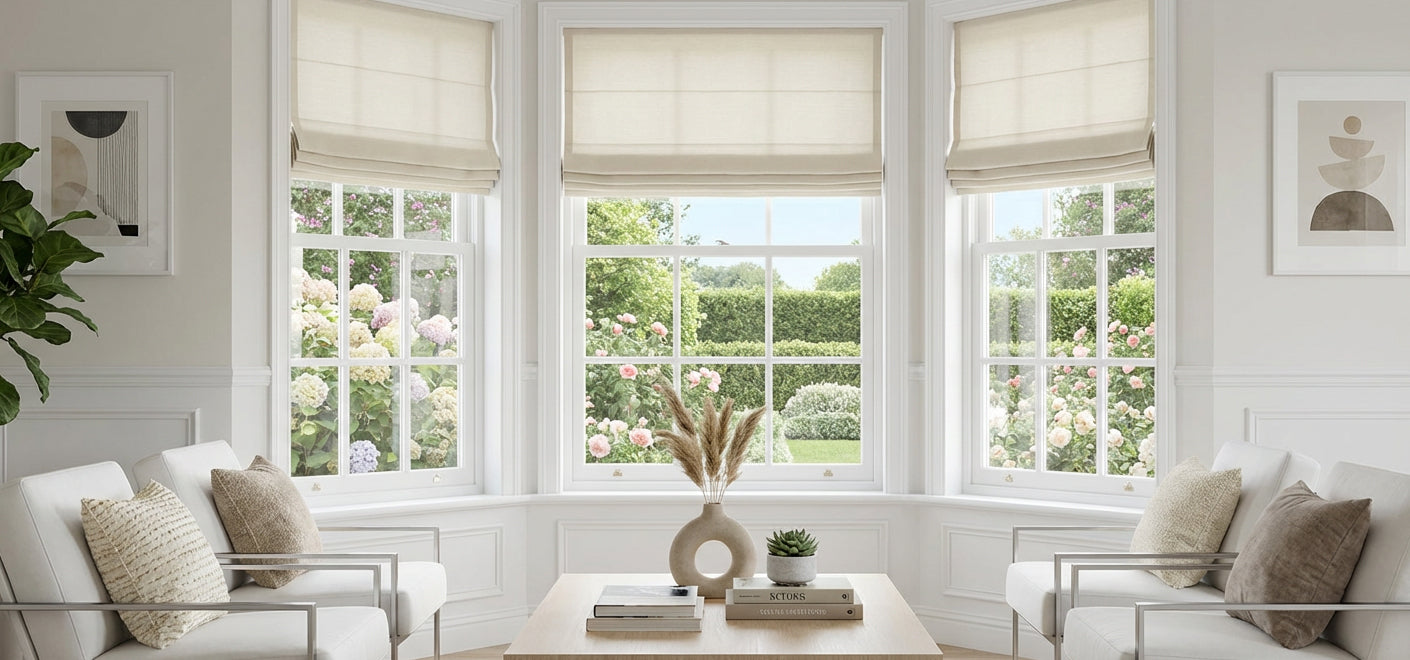

Bay windows instantly elevate a home — filling your living room with warm sunlight, creating the perfect breakfast nook view, or turning a quiet corner into your favorite reading spot. But without the right bay window blinds or shades, those beautiful bay windows can also bring glare, heat, and privacy issues. In this guide, you’ll discover how to measure bay windows correctly, which blinds and shades work best, and how smart solutions from SmartWings make it easy to enjoy style, comfort, and modern convenience in every bay window space.
Why Bay Windows Need Special Window Treatments?
Bay windows are designed to stand out — they extend outward from the wall, create beautiful architectural depth, and let in more natural light than standard flat windows. But that unique structure also makes them more challenging to cover properly.
Unlike regular windows, bay windows are:
- Angled instead of flat
- Often limited in mounting depth
- Made up of multiple connected window sections
These features mean that standard blinds or shades can leave large light gaps, block your view when raised, or simply fail to fit the angles cleanly.
Privacy is another major concern — especially for bay windows facing the street. While they bring in wonderful daylight, they can also expose your living room, dining area, or bedroom to passersby. Without the right window treatments, maintaining comfort and privacy at the same time becomes difficult.
That’s why bay windows require window coverings that:
- Fit each section precisely
- Stack neatly without blocking the glass
- Follow the angles of the window frame
- Provide flexible light and privacy control throughout the day
With the right blinds or shades designed specifically for bay window layouts, you can enjoy the beauty of your space without sacrificing comfort or privacy.
What Is a Bay Window?
A bay window is a window structure that projects outward from the wall, typically made of three or more individual windows set at angles.
There are two common bay window styles:
Traditional Bay Window
- The three windows connect closely together.
- Minimal wall space between each window.
- Requires very precise measurements to avoid gaps.
Separated Bay Window
- Each window is divided by a noticeable wall section or decorative trim.
- Easier to measure and treat as individual units.
- More flexibility in blind or shade choices.
Knowing which bay window style you have makes measuring easier and helps you choose the best-fitting blinds or shades.
How Do You Measure Bay Windows for Blinds or Shades?
Accurate measuring is the most important step when installing blinds or shades on bay windows.
Step 1: Gather Your Tools
You’ll need:
- Metal tape measure
- Pencil and paper
- Step ladder (if needed)
- Cardboard or stiff paper for templates
Step 2: Choose Your Blind or Shade Type First
Different blinds require different mounting depths.
Decide whether you want cellular shades, Roman shades, or woven wood shades before measuring.
Step 3: Create Cardboard Templates
- Cut cardboard to match the headrail depth of your chosen shades.
- Make four rectangular templates—one for each bend and window section.
Step 4: Position the Templates
- Place templates at each angle so the front corners touch.
- Tape them lightly to the window ledge to hold in place.
Step 5: Measure the Intersection Points
- Measure the left window from the left edge to where it meets the center template.
- Do the same for the right window.
- Measure the center window between the two intersection points.
Step 6: Measure the Height
- Measure the height of all three sections.
- Always use the shortest height when placing your order.
For more detailed instructions, customers can visit the SmartWings – How to Measure for Specialty Windows.

Which Blinds and Shades Work Best for Bay Windows?
Because bay windows are angled and often have limited mounting depth, not all window treatments perform equally well. The best blinds and shades for bay windows are those that require minimal depth, stack neatly when raised, and follow the window’s shape without leaving large light gaps.
Here are the three most practical and popular options.
Cellular Shades (Honeycomb Shades)
Best for: Shallow mounting depth, energy efficiency, clean appearance.
Cellular shades are often the top choice for bay windows because of their compact headrail and slim profile.
Why they work well:
- Require very little mounting depth — perfect for tight bay window frames
- Stack tightly when raised, keeping the view clear
- Honeycomb structure traps air, improving insulation
- Excellent for bedrooms and living spaces where temperature control matters
If you want a modern, minimal look with maximum performance, cellular shades are hard to beat.
Roman Shades
Best for: Soft fabric style, decorative spaces, light control flexibility.
Roman shades combine the elegance of drapery with the simplicity of a shade system.
Why they work well:
- Shallower depth requirement than most roller shades
- Create fewer side light gaps in angled windows
- Available in light-filtering or blackout fabrics
- Multiple fold styles for both modern and traditional interiors
They’re ideal for dining rooms, sitting areas, and bay window nooks where design matters as much as function.
Woven Wood Shades (Bamboo / Grass Shades)
Best for: Natural texture, warm aesthetics, casual interiors.
Woven wood shades offer the same practical benefits as Roman shades but with a more organic look.
Why they work well:
- Similar shallow mounting depth to Roman shades
- Easy installation on angled bay window frames
- Adds warmth and texture to living spaces
- Can be paired with liners for added privacy or light blocking
These are perfect for homeowners who want a relaxed, natural feel without sacrificing performance.
What to Avoid
Some window treatments struggle in bay window setups, including:
- Shades with deep headrails
- Systems with high stack height
- Treatments that require wide flat mounting surfaces
These can cause poor fit, uneven light gaps, or blocked views when fully raised.

Why Choose SmartWings Motorized Shades for Bay Windows?
Bay windows often consist of multiple panels set at different angles, which makes manual adjustment inconvenient — especially when some windows are tucked into corners or placed behind furniture. Motorized shades remove that frustration entirely.
SmartWings motorized shades are designed to follow the unique geometry of bay windows while giving you effortless control over light and privacy.
What makes them a smart fit:
-
Precise fit for angled windows
Each section can be measured and controlled independently for a clean, uniform appearance.
-
Hands-free convenience
Adjust multiple bay window shades at once using a remote, mobile app, or voice commands.
-
Smart home integration
Compatible with Apple HomeKit, Amazon Alexa, Google Assistant, SmartThings, and Matter ecosystems.
-
Flexible power options
Choose from rechargeable battery motors or solar-powered systems — no wiring required.
-
Better privacy for street-facing bay windows
Set schedules so your shades close automatically in the evening, protecting your home from outside view.
Imagine your bay window shades closing automatically at sunset, keeping your living room private without lifting a finger. With SmartWings, your bay windows don’t just look beautiful — they work intelligently with your lifestyle.
Conclusion
Bay windows add charm, light, and architectural character to any home — but they also come with unique challenges. From angled frames and limited mounting depth to street-facing privacy concerns, choosing the right blinds or shades makes all the difference. By selecting bay window-friendly options such as cellular shades, Roman shades, and woven wood shades, and measuring each section accurately, you can enjoy better light control, insulation, and everyday comfort.
For homeowners who want to take their bay windows to the next level, motorized bay window shades offer a seamless blend of design and technology. With smart scheduling, hands-free control, and energy-efficient fabrics, your bay windows become easier to manage and more enjoyable year-round — turning a beautiful feature into a truly functional part of your home.


